EXPASA Dangozaka Guide: The Mega Rest Stop You Must Visit on the Chuo Expressway
| Facility Feature | Crucial Strategy for Tourists |
|---|---|
| Food Court Strategy | Secure your table before purchasing tickets; seating is fiercely contested. |
| Traffic Evasion | Leave before 3:00 PM on Sundays to avoid the Kobotoke Tunnel nightmare. |
| Parking Navigation | Stay strictly in the passenger vehicle lanes; do not enter the truck area. |
Surviving the Crowds at a Japanese Mega SA
Securing a Table at the Food Court First
EXPASA Dangozaka is not just a rest stop; it is a colossal commercial complex. As one of the largest service areas in Japan, it attracts massive crowds. The primary battlefield for any foreign tourist here is the food court. If you arrive during the lunch rush (11:30 AM to 1:30 PM), the entire dining area will be packed with thousands of travelers.
The biggest mistake foreign drivers make is immediately walking up to the touch-screen ticket machines to order food. If you buy your food first, you will end up holding a tray of hot ramen while wandering aimlessly through the aisles, desperately looking for an empty seat. Japanese families use a strict ‘secure the table first’ strategy.
Before you even look at the menu, deploy a member of your group to find a table. Once you find one, leave a non-valuable item (like a water bottle, a jacket, or a cheap umbrella) on the table to claim it. Do not leave your smartphone or passport. In Japan, leaving a jacket is universally recognized as “this table is taken.” Only after your table is secured should you proceed to the ticket machines.
When you finish eating, do not linger. Return your trays to the designated ‘Return’ (返却口 – Henkyakuguchi) counters associated with the specific restaurant you ordered from. Wiping the table down with the provided damp cloths before you leave is standard etiquette and ensures the next tired driver can sit down immediately.
Navigating the Chaotic Parking Lot Safely
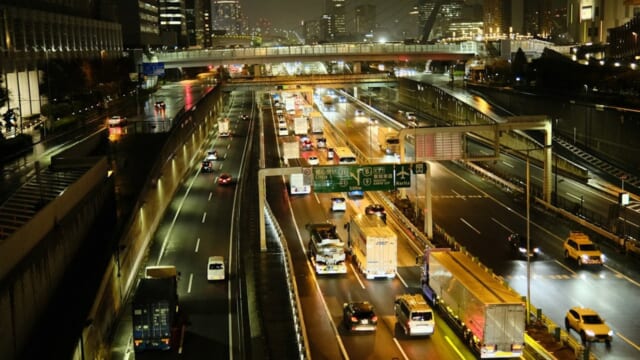
The scale of the Dangozaka parking lot is intimidating. Because this SA serves as a major hub for both commercial logistics and tourism, the traffic flow is intense. When you pull off the Chuo Expressway, you must make a critical lane decision immediately based on the overhead blue signs.
You must follow the lanes marked for ‘Passenger Vehicles’ (乗用車 – standard cars). If you accidentally veer into the ‘Large Vehicles’ (大型車 – trucks and buses) zone, you will become trapped among massive 18-wheelers. Backing up is illegal and extremely dangerous. You will be forced to park far away from the facility and walk across lanes of active truck traffic.
Once in the passenger zone, rely on the digital guidance system. Dangozaka uses overhead sensors that display green lights for empty spots and red lights for occupied ones. Do not waste time circling the front rows nearest to the restrooms; these are fiercely contested. Drive directly to the far back corners of the lot where green lights are plentiful.
When walking from your parked rental car to the facility, strictly use the green-painted pedestrian walkways. Do not cut diagonally across empty parking spaces. Cars pull into these spots rapidly and often blindly, making pedestrians highly vulnerable. Always hold the hands of small children tightly until you are safely on the main sidewalk.
Strategic Timing and Evasion Tactics
Evading the Sunday Afternoon Kobotoke Bottleneck
If you are traveling inbound (towards Tokyo) on a Sunday afternoon or the final day of a national holiday, EXPASA Dangozaka is your last major bastion before hell begins. The infamous Kobotoke Tunnel lies just ahead on the route back to the capital.
By 3:00 PM on a Sunday, traffic backs up from the tunnel all the way past Dangozaka, creating a gridlock that can easily exceed 25 kilometers. If you get caught in this, a standard 60-minute drive to Tokyo will morph into a grueling three-to-four-hour ordeal of stop-and-go misery.
Your strategy must be proactive. You must aim to pass Dangozaka before 2:00 PM. If you arrive at Dangozaka at 4:00 PM and see the digital warning boards flashing red with “30km Traffic Jam Ahead,” do not get back on the highway immediately. Use the facility’s extensive food and shopping options to wait it out. Having dinner here and departing at 8:00 PM is vastly superior to burning fuel and patience in a traffic jam.
Ensure every passenger uses the restrooms before you leave this SA. Once you commit to the highway and enter the Kobotoke bottleneck, there are zero opportunities to stop. Ignoring this rule, especially with children, is a recipe for disaster.
Using the Smart Restroom Digital Monitors
Because Dangozaka processes tens of thousands of visitors daily, the restroom infrastructure is massive. However, foreign tourists often line up unnecessarily at the very first entrance they see, creating a massive bottleneck at the front of the facility while stalls in the back remain completely empty.
Look up before you enter. Above the main restroom entrances, there are large digital monitors displaying a real-time map of the facility. These screens show exactly which zones are crowded (red) and which are empty (green). Bypass the front section entirely and walk deep into the back of the building where the green zones are indicated.
This SA also features specialized family rooms and barrier-free toilets. The baby care rooms here are exceptionally well-equipped, featuring private nursing booths, diaper disposal units that seal odors, and sinks dispensing 70°C water designed explicitly for safely preparing infant formula without destroying its nutrients.
Remember that Japanese etiquette dictates a high level of cleanliness. You must flush all toilet paper down the toilet, not in the small sanitary bins. If you use a washlet (electronic bidet), press the ‘STOP’ (a black square symbol) before standing up to avoid spraying water across the stall.
- Secure a table with a jacket or water bottle before ordering food.
- Leave for Tokyo before 3:00 PM on Sundays to avoid severe traffic.
- Check the digital restroom maps to bypass the long lines at the entrance.
Food and Charging Infrastructure at Dangozaka
Buying Yamanashi Specialties at the Outdoor Stalls
While the indoor food court offers standard meals like ramen and curry, the true culinary highlights of Dangozaka are located at the outdoor vendor stalls. Because this SA acts as the gateway to Yamanashi Prefecture, the vendors here specialize in regional street food.
You absolutely must try the ‘Koshu Beef Skewers’ (甲州牛串). Koshu beef is a highly prized local wagyu. The vendors grill these skewers over open charcoal flames, creating an incredible aroma that fills the parking lot. The fat melts instantly in your mouth, providing a massive burst of savory energy.
However, there is a strict catch for foreign tourists: these outdoor stalls almost exclusively operate on a cash-only basis. They will not accept foreign credit cards, Apple Pay, or even local transit cards like Suica in many cases. You must carry 1,000 JPY bills and 500 JPY coins to purchase street food.
Furthermore, do not eat while walking through the crowds, and absolutely do not bring greasy skewers back into your rental car. Stand near the stall, eat the food, and immediately return the sharp bamboo skewers to the vendor’s dedicated trash can. A dropped skewer in the parking lot can puncture a tire.
The Harsh Reality of EV Charging Delays
If you are driving a rented electric vehicle (EV), such as a Nissan Leaf or a Tesla, Dangozaka presents a massive logistical challenge. While the SA is equipped with rapid CHAdeMO chargers, the sheer volume of EV traffic funneling through this specific stop creates severe bottlenecks.
During weekends and holidays, it is completely normal to see three or four EVs queued up waiting for a single charger. Because highway operators limit charging sessions to 30 minutes to force turnover, a three-car line guarantees you will wait 90 minutes just to plug your vehicle in.
Do not plan to do a primary, deep charge at Dangozaka during peak hours. You will ruin your itinerary. Instead, use this stop only for emergency top-offs if you miscalculated your range. A much smarter strategy is to charge at smaller, less glamorous PAs (Parking Areas) down the line, or utilize destination chargers at your hotel overnight.
If you are forced to wait, do not block the main traffic lanes while idling in the queue. Pull tightly to the side and activate your hazard lights to signal to other drivers that you are waiting for the charger, not just illegally parked. Always monitor your 30-minute timer strictly; unplugging immediately when your session ends is vital etiquette.
Final Preparations Before Leaving Dangozaka
EXPASA Dangozaka is a behemoth of the Japanese highway system. Navigating it successfully requires strategic thinking: securing tables before buying food, using the digital maps to avoid restroom lines, and managing your time to avoid the Kobotoke Tunnel traffic.
Ensure you have physical cash on hand to enjoy the incredible local street food, and always respect the strict parking lot lane assignments to keep your rental vehicle safe from commercial trucks.
By mastering the chaos of this mega SA, you transform a potentially stressful pit stop into a highly efficient and enjoyable part of your road trip. Prepare your route, check your fuel gauge, and merge back onto the Chuo Expressway with confidence.
For more detailed advice on navigating severe traffic bottlenecks, read our guide on Understanding Japanese Highway Traffic Jams: How to Survive the Golden Week Rush. If you are driving an EV, you absolutely must check out The Ultimate Guide to EV Charging on Japanese Expressways for Foreigners.