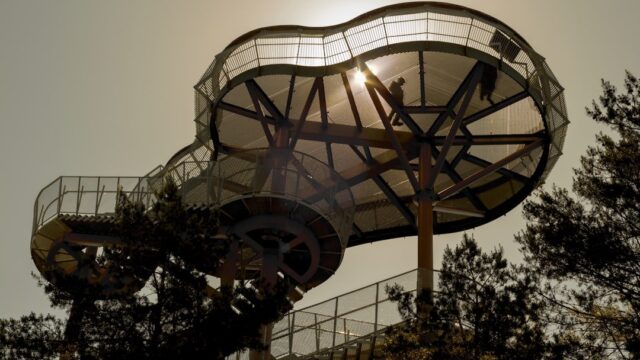
Shakado PA Museum Guide: Exploring Ancient Jomon History on the Highway

| Facility Feature | Crucial Strategy for Tourists |
|---|---|
| Museum Access | Prepare to walk up a long, steep flight of concrete stairs from the parking lot. |
| Museum Hours | Closes strictly at 5:00 PM (final entry 4:30 PM). Closed on Tuesdays. |
| Local Food Warning | Never eat Kikyo Shingen Mochi (powdered sweets) inside your rental car. |
Accessing the Shakado Jomon Museum
Navigating the Steep Stairs and Operating Hours
Shakado PA is entirely unique among Japanese highway stops because it functions as the direct gateway to an acclaimed archaeological museum. However, accessing the ‘Shakado Museum of Jomon Culture’ requires physical effort. It is not located inside the main PA building. When you park, you will see a long, steep flight of concrete stairs built directly into the forested hillside next to the facility.
You must climb these stairs to reach the museum entrance. The walk takes about three to five minutes, but the incline is severe. If you are traveling with elderly passengers or individuals with mobility issues, this climb will be extremely difficult, if not impossible. There is no elevator or escalator from the PA level.
Furthermore, timing is critical. Many tourists assume the museum follows the 24-hour schedule of the highway PA. It absolutely does not. The museum operates on standard Japanese cultural facility hours. It opens at 9:00 AM and closes strictly at 5:00 PM, with the final admission cut off at 4:30 PM. If you arrive at 4:35 PM, the staff will politely but firmly refuse entry. Additionally, the museum is typically closed on Tuesdays, so check your calendar before making this a priority stop.
Before you leave your rental car to hike up the stairs, verify that you have turned your headlights off. Exploring the museum takes roughly 45 minutes to an hour. Leaving your headlights burning for an hour while you look at pottery will drain your battery completely. Calling roadside assistance (JAF) to jump-start a dead battery at a rural PA will cost you heavily in both time and money.
Why is there a Museum on the Highway?
Foreign tourists are often baffled as to why a major archaeological museum is attached to a random highway rest stop. The answer lies in the construction of the Chuo Expressway itself. During the 1980s, when bulldozers were carving the route through this specific mountain pass, they accidentally struck one of the most massive ancient settlements ever discovered in Japan.
The construction had to be halted while archaeologists frantically excavated the site. They unearthed an astonishing 1,116 clay figures (Dogu) and thousands of pieces of ornate pottery dating back to the Jomon Period (circa 14,000 to 300 BCE). Because the artifacts were literally dug out of the dirt where the PA now stands, the government built the museum directly above the highway to house the treasures on their native soil.
Inside the museum, you will encounter the famous Dogu figures. These are not standard pottery; they feature strange, almost alien-like appearances with massive “goggle” eyes and intricate body markings. Fascinatingly, almost all of these figures were intentionally broken before they were buried by the ancient people, leading archaeologists to believe they were used in shamanistic rituals to absorb illness or bad luck.
When looking for souvenirs, skip the generic cookies at the PA downstairs. Buy a miniature clay replica of a goggle-eyed Dogu from the museum gift shop. A mysterious, 5,000-year-old alien-looking clay figure sitting on your desk back home is a far more compelling conversation starter than a plastic fan or a keychain.
- The museum is accessed via steep stairs; there is no elevator.
- Ensure your car headlights are OFF to avoid a dead battery.
- Buy a unique miniature Dogu clay figure replica as a souvenir.
Seasonal Hazards and Local Treats
Surviving the Spring Peach Blossom Congestion
Shakado PA sits on the elevated rim of the Kofu Basin, which is the heartland of Japan’s peach farming industry. If you drive through this area in early to mid-April, the entire valley floor explodes into a vibrant, endless carpet of pink peach blossoms. The view from Shakado PA is universally considered one of the best in the country.
However, this beauty comes with a severe logistical penalty. During this two-week blossoming window, the small parking lot at Shakado PA descends into absolute chaos. Hundreds of amateur photographers, tourist buses, and local sightseers flood the facility. The lines for the restrooms can stretch into the parking lot, and finding a space for your rental car becomes a game of aggressive patience.
If you visit during this time, do not try to squeeze into illegal parking spaces or block commercial trucks. Wait patiently for a designated passenger spot to open. Furthermore, be extremely careful when opening your doors, as the high density of cars makes door-dings (door punches) highly likely.
The Danger of Eating Shingen Mochi Soft Serve
When you descend the stairs from the museum back to the PA, you will likely be hungry. The signature item sold at the outdoor snack counters here is the ‘Kikyo Shingen Mochi Soft Serve’ (桔梗信玄餅ソフト). This consists of rich vanilla ice cream topped with chewy rice cakes, dark brown sugar syrup, and a massive dusting of roasted soybean powder (kinako).
It is incredibly delicious, but you must adhere to a strict rule: Do not eat this inside your rental car.
The roasted soybean powder is incredibly fine, light, and dry. If you take a bite inside the car, or if the air conditioning blows on it, the brown powder will explode off the ice cream and coat the interior of the vehicle. If the sticky brown sugar syrup drips onto the fabric seats, it is nearly impossible to remove.
Returning a rental car with seats stained by syrup and soybean powder guarantees you will be hit with a massive cleaning fee (Non-Operation Charge or NOC), often exceeding 20,000 JPY. Eat the soft serve while standing outside the PA or sitting on the designated benches. Wash your hands thoroughly before touching your steering wheel.
Continuing Your Drive Through Yamanashi
Shakado PA proves that Japanese highway stops are not just places to use the bathroom—they are cultural destinations in their own right. By combining highway logistics with deep archaeological history, it offers an unforgettable experience for tourists.
Just remember to manage your time around the museum’s strict operating hours, protect your rental car’s battery and interior, and prepare for massive crowds if you visit during the spring peach blossom season.
For more information on avoiding massive holiday traffic jams, read our guide on Understanding Japanese Highway Traffic Jams: How to Survive the Golden Week Rush. If you want to know about other incredible stops on this route, check out Mastering the Chuo Expressway: A First-Timer’s Guide.