Spectacular Observation Decks: Best Highway Rest Stops for City Night Views
Driving in Japan after the sun goes down is a completely different experience than navigating the expressways by day. As the natural landscapes fade into darkness, the vibrant, neon-lit cities and massive industrial zones begin to glow, creating some of the most breathtaking urban panoramas in the world. For travelers exploring Japan by rental car, the highway network offers incredible vantage points. Many major Service Areas (SA) and Parking Areas (PA) feature dedicated observation decks designed specifically for enjoying these spectacular night views.
The Magic of Japanese Highway Night Views
In Japan, enjoying a beautiful night view—often referred to as “Yakei”—is a highly popular leisure activity, particularly for couples on dates or photographers looking for the perfect shot. The expressways, often elevated high above the city streets or carved into mountainsides, naturally provide unobstructed views that are hard to find elsewhere.
A Free and Accessible Attraction
In major cities like Tokyo or Osaka, accessing a high-quality observation deck (like the Tokyo Skytree or Abeno Harukas) usually involves purchasing an expensive ticket, waiting in long lines, and dealing with massive crowds. In contrast, the observation decks at highway rest stops are completely free and easily accessible to anyone driving on the toll road.
You simply pull your car into the parking lot, walk a few steps to the designated viewing area or rooftop deck, and enjoy the scenery. This makes it an incredibly convenient activity to add to your road trip itinerary. Whether you are taking a quick break to stretch your legs or stopping for a late-night meal, enjoying a stunning city skyline at no extra cost is a fantastic perk of driving in Japan.
Different Types of Night Views
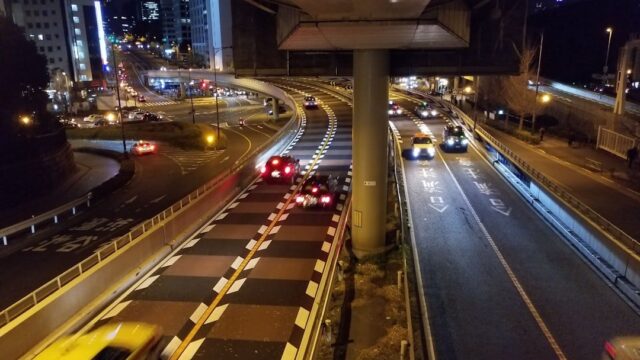
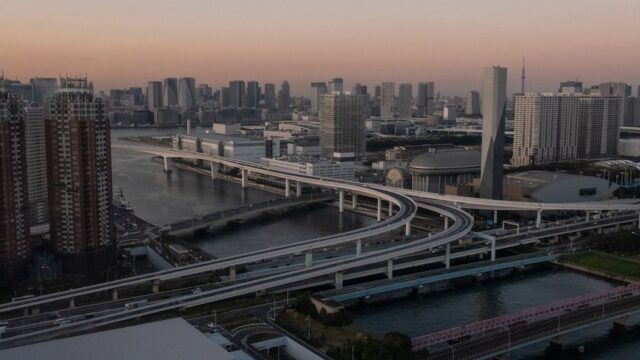
The type of night view you will experience depends entirely on which expressway you are driving. If you are navigating the intricate Shuto Expressway network in Tokyo, you will be treated to dense, futuristic cityscapes with towering skyscrapers and glowing bridges.
If you are driving along coastal routes like the Isewangan Expressway or the Hanshin Expressway, you will see a different kind of Yakei: the “Factory Night View” (Kojo Yakei). This is a uniquely popular aesthetic in Japan where sprawling industrial complexes and petrochemical plants are illuminated by thousands of work lights and safety flares, creating a scene that looks like something out of a science fiction movie. Understanding these different styles will help you plan your evening drives. For more on romantic spots, check out our guide on Romantic Night Views: The Most Scenic Highway Parking Areas for Couples.
Why Night Views from the Expressway are Unique
You might wonder why stopping at a highway rest area is better than simply driving to a famous viewpoint in the mountains. The answer lies in the specific infrastructure and location of these Service Areas, which are engineered to provide maximum comfort alongside the view.
Comfort and Facilities
When you drive to a remote mountain viewpoint to see a city skyline, you are often standing in the cold, dealing with insects, and lacking any facilities. A highway Service Area provides a highly civilized way to enjoy the scenery. The observation decks are well-paved, safely enclosed with glass or strong barriers, and frequently patrolled for safety.
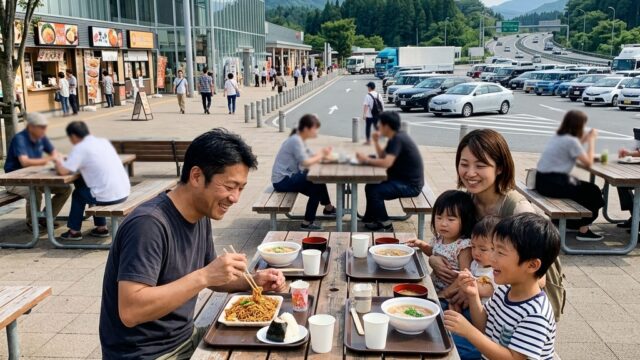
More importantly, you have immediate access to world-class amenities. If it is a freezing winter night, you can buy a hot can of coffee or a steaming bowl of ramen from the food court, walk out to the deck, and enjoy the view while staying warm. In the summer, you can grab a cold ice cream and sit on the provided benches. This combination of spectacular scenery and immediate comfort is what makes highway observation decks so popular.
Elevated Perspectives
Because expressways need to bypass local traffic, they are often built as massive elevated viaducts or routed along high ridges surrounding a city. The Service Areas built on these routes naturally inherit this elevated perspective.
For example, a Service Area built on a mountain pass overlooking a valley provides a sweeping, panoramic view that encompasses the entire city grid below. It allows you to see the true scale of Japanese urbanization, with glowing roads stretching out like arteries connecting distant hubs of light. You get a macro view of the city that is impossible to appreciate from street level. For an overview of different facility types, see our Japan Highway Service Areas Guide: SA vs PA, Food, Gas Stations, Restrooms & More.
- Completely free to access if you are already on the expressway.
- No lines or crowds like city observation towers.
- Safe, well-lit environments with 24-hour food and restrooms.
- Unique elevated perspectives of cities and industrial zones.
The Legendary Night View from Kariya Highway Oasis
If there is one highway rest stop in Japan that is famous for its visual impact, it is the Kariya Highway Oasis located on the Isewangan Expressway in Aichi Prefecture, near Nagoya. It is not just a place with a good view; it is a visual landmark in itself.
The Iconic Ferris Wheel
The defining feature of the Kariya Highway Oasis is its massive, 60-meter-tall Ferris wheel. While riding the Ferris wheel provides a fantastic view, simply observing it illuminated against the night sky is a spectacle. The wheel features dynamic LED lighting that changes colors and patterns throughout the evening.
This Service Area is incredibly popular for evening dates. You can grab dinner at the expansive food court, take a ride on the Ferris wheel to see the sprawling lights of the Nagoya metropolitan area, and then relax in the adjacent natural hot spring facility. It is a prime example of how Japanese highway rest stops function as comprehensive entertainment destinations, rather than just pit stops.
The Isewangan Expressway Industrial View
The view from Kariya Highway Oasis also highlights the surrounding region’s industrial strength. The Isewangan Expressway runs through major port areas and manufacturing hubs (including Toyota’s home territory).
Looking out from the observation areas, you can see the glowing lights of massive factories and shipping yards. This is a prime location to appreciate the “Kojo Yakei” (Factory Night View) aesthetic. The scale of the illuminated infrastructure is mesmerizing and provides a stark, beautiful contrast to the traditional shrines and temples you might visit during the day. For more details on this specific stop, read our article on the Kariya Highway Oasis: The Ultimate Japanese Rest Stop Experience.
Overlooking Tokyo Bay at Umihotaru PA
For drivers navigating the Kanto region around Tokyo, the most spectacular night view requires driving over—and under—the ocean. The Tokyo Bay Aqua-Line is a toll road that crosses Tokyo Bay, consisting of an underwater tunnel and a massive bridge. Right in the middle, where the tunnel meets the bridge, is the Umihotaru Parking Area.
A 360-Degree Panoramic Ocean View
Umihotaru PA is an architectural marvel. It is an artificial island built entirely for the purpose of housing a rest stop. Because it is surrounded by water, the observation decks on the top floor provide an unobstructed, 360-degree panoramic view of Tokyo Bay.
At night, this view is breathtaking. Looking towards the west, you can see the dense, glittering skyline of Tokyo, including landmarks like the Tokyo Tower and the Rainbow Bridge. To the east, you see the glowing industrial coast of Chiba Prefecture. Watching the massive cargo ships slowly navigate the dark waters below while planes descend into Haneda Airport overhead is an unforgettable experience.
The Best Time to Visit Umihotaru
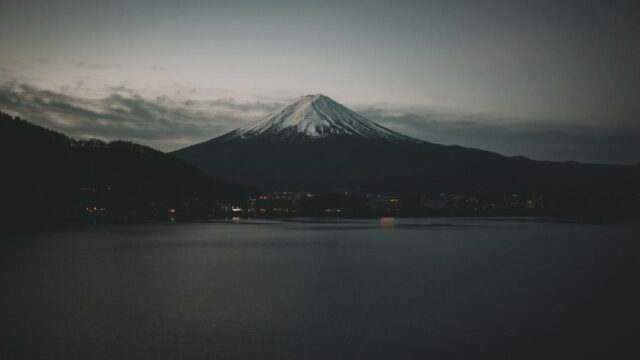
While the night view is spectacular, the absolute best time to arrive at Umihotaru PA is during the “magic hour”—the short window of twilight just after sunset. If the weather is clear, you can watch the silhouette of Mount Fuji against the fading orange sky behind the glowing Tokyo skyline.
Because this is such a famous viewpoint, the parking lot can get very crowded on weekends and holidays, especially right before sunset. If you are planning to visit, try to arrive early to secure a parking spot. The facility has numerous restaurants and cafes on the upper floors, allowing you to enjoy a meal right next to the massive glass windows overlooking the bay. If you are nervous about driving in Tokyo, review our guide on Navigating Urban Expressways: How to Survive the Shuto Expressway in Tokyo.
Kansai’s Best Kept Secret: Suita SA and Awaji SA
While Tokyo and Nagoya have famous viewing spots, the Kansai region (Osaka, Kyoto, Kobe) also boasts incredible highway observation decks. The topography here—cities pressed between mountains and the ocean—creates brilliant nighttime panoramas.
Suita SA (Meishin Expressway)
Located just outside of Osaka on the Meishin Expressway, the Suita Service Area is a classic spot for enjoying the urban night view. This Service Area is situated on an elevated section of the highway that looks directly down over the sprawling northern suburbs of Osaka.
The view here is a classic urban grid, stretching out endlessly with the bright lights of the city center glowing in the distance. The observation area is very simple, offering benches where you can sit and watch the endless stream of headlights and taillights flowing along the massive expressway interchanges below. It is a mesmerizing, hypnotic view that perfectly captures the energy of Japan’s second-largest metropolis.
Awaji SA (Kobe-Awaji-Naruto Expressway)
If you are crossing from the main island of Honshu to Shikoku, you will take the Kobe-Awaji-Naruto Expressway, which features the magnificent Akashi Kaikyo Bridge (one of the longest suspension bridges in the world). Just after crossing the bridge onto Awaji Island, you will find the Awaji Service Area.
The observation deck here is phenomenal. It looks back across the ocean strait toward the city of Kobe. At night, the Akashi Kaikyo Bridge is beautifully illuminated, its massive cables glowing against the dark water, leading your eye straight to the glittering coastline of Kobe. This Service Area also features a Ferris wheel, offering an even higher vantage point. It is widely considered one of the most romantic highway stops in western Japan. For more details on this drive, read our guide on the Kansai to Shikoku Scenic Route: Unbeatable Ocean Views at Awaji SA.
Tips for Enjoying Highway Observation Decks
To make the most of your nighttime visits to these spectacular viewpoints, there are a few practical tips regarding photography, safety, and etiquette that foreign drivers should keep in mind.
Photography Tips for Night Views
Taking good photos of a city skyline at night through a glass window or from a windy observation deck can be tricky. If you are using a smartphone, make sure to use the dedicated “Night Mode” and hold the phone as still as possible, resting it on a railing if one is available.
If you are shooting through the glass windows of an indoor observation deck (like at Umihotaru), you will likely deal with reflections from the interior lights. To avoid this, press the lens of your camera or smartphone directly flat against the glass. This blocks out the light from behind you and allows you to capture a clear shot of the city lights outside. If you have a proper camera, a small travel tripod is incredibly useful for capturing long-exposure shots of the glowing highway traffic below.
Safety and Etiquette
When visiting these observation decks late at night, always prioritize safety. While Japanese Service Areas are extremely safe, it is still best to stay in well-lit areas. If you are traveling with children, ensure they do not climb on the safety railings.
Regarding etiquette, these observation areas are shared public spaces. Be mindful of others trying to enjoy the view. Avoid using loud voices or playing music on your phone. If you are taking photos, be considerate of people standing near you and do not block the best viewing spots for extended periods.
| Service Area (SA) / PA | Expressway | Region | Key Viewpoint Feature |
|---|---|---|---|
| Kariya Highway Oasis | Isewangan Expressway | Nagoya (Aichi) | Illuminated Ferris Wheel & Industrial Views |
| Umihotaru PA | Tokyo Bay Aqua-Line | Tokyo Bay | 360-Degree Ocean View & Tokyo Skyline |
| Suita SA | Meishin Expressway | Osaka | Sprawling Urban Grid & Highway Interchanges |
| Awaji SA | Kobe-Awaji-Naruto | Kobe / Awaji | Illuminated Akashi Kaikyo Bridge |
Conclusion
A road trip in Japan does not have to end when the sun goes down. The country’s expressways transform into incredible viewing platforms, offering stunning vistas of illuminated cities, glowing bridges, and massive industrial zones. By planning your drive to include stops at major Service Areas with dedicated observation decks, you can add a completely free and deeply memorable activity to your itinerary.
Whether you are marveling at the 360-degree ocean panorama from the artificial island of Umihotaru PA on Tokyo Bay, or admiring the illuminated Akashi Kaikyo Bridge from the Awaji SA, these facilities provide the perfect blend of spectacular scenery and immediate comfort. You can grab a hot coffee, walk out to a safe, well-designed viewing platform, and take in the massive scale of Japan’s urban landscape.
Next time you are driving a rental car in Japan, do not just rush to your hotel when it gets dark. Take your time, pull into a major Service Area, and discover the magic of the Japanese “Yakei.” It is an experience that perfectly highlights the intersection of Japan’s natural beauty and its incredible modern infrastructure.