Sleeping in Your Car in Japan: Rules, Manners, and Safe Highway Rest Stops
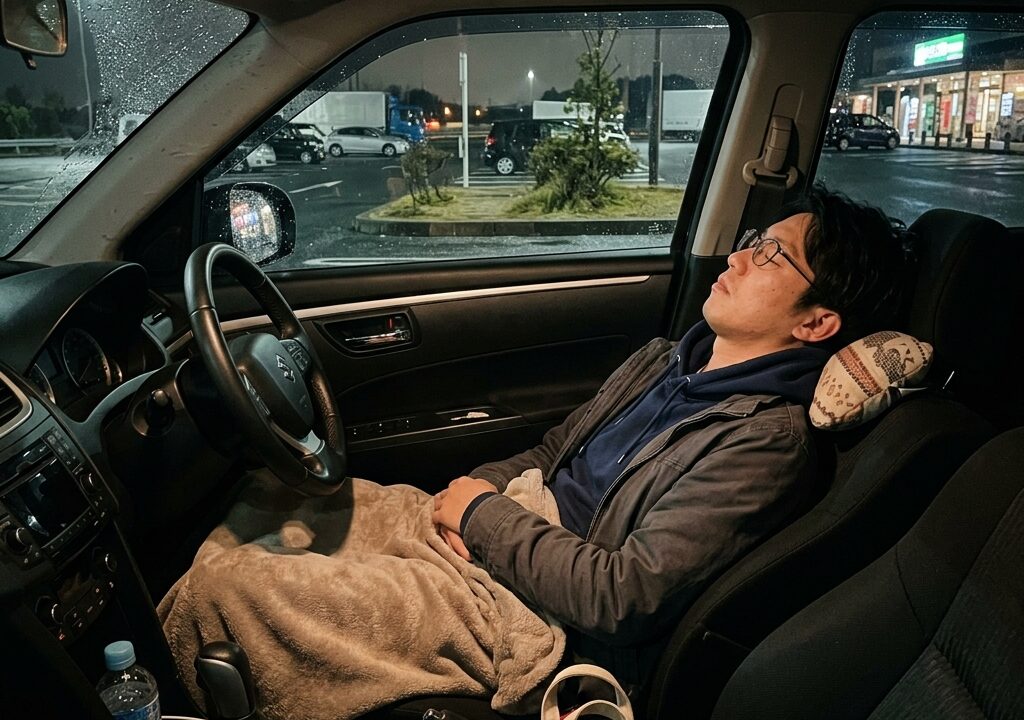
Road tripping across Japan in a rental car provides unmatched freedom, and for many adventurous or budget-conscious travelers, that freedom extends to where they spend the night. “Shachuhaku,” the practice of sleeping in your car, has surged in popularity across Japan in recent years. It is a fantastic way to save money on expensive hotels and wake up exactly where you want to be, whether that is near a famous hiking trail or ready to tackle the morning traffic into Tokyo.
The Japanese highway network, with its incredibly well-equipped Service Areas (SA) and Parking Areas (PA), naturally seems like the perfect place to pull over and get some shut-eye. However, before you recline your seat and unpack your sleeping bag, it is crucial to understand that Japanese rest stops are not campgrounds. While taking a nap in your car is completely legal and actively encouraged for driver safety, there is a very strict set of unwritten rules and official etiquette that separates acceptable resting from inappropriate camping. This guide will clarify the exact rules for sleeping in your car at Japanese highway facilities, help you choose the safest and quietest spots to park, and highlight the essential amenities you can rely on during the night.
The Popularity of Car Camping on Japanese Highways
Sleeping in a vehicle is an established part of Japanese car culture, driven by a combination of practicality, safety, and a deep appreciation for the outdoors.
Why Sleeping in a Car is Widely Accepted in Japan
Japan is arguably one of the safest countries in the world, which makes the prospect of sleeping in a parked car far less intimidating than it might be elsewhere. Violent crime and theft are exceedingly rare, meaning travelers generally feel secure locking their doors and going to sleep in a public parking lot. Furthermore, the high cost of traditional accommodation and the rigid check-in times of ryokans (traditional inns) make the flexibility of “shachuhaku” highly appealing.
The highway operators themselves recognize the necessity of sleeping in cars. The primary function of any Service Area or Parking Area is to prevent traffic accidents caused by driver fatigue. To this end, they actively encourage drivers who feel sleepy to pull over and rest for as long as they need to recover their concentration. You will never be harassed by security guards or police simply for sleeping in the driver’s seat of your parked rental car at 2:00 AM; it is viewed as a responsible driving decision rather than loitering. This underlying culture of safety and tolerance makes the Japanese highway system incredibly accommodating for road trippers who need a place to rest for the night.
The Difference Between Napping and True Camping
While sleeping in your car is accepted, the critical distinction you must understand is the difference between “resting” (kamin) and “camping” (kyanpu). Highway rest stops are strictly for resting.
Resting implies that you are using the parking space temporarily to sleep inside your vehicle before continuing your journey. Your activity is entirely contained within the car. Camping, on the other hand, implies claiming the space as a prolonged living area. This includes pitching tents on the grass, setting up folding chairs in the parking space, cooking food on portable stoves, or hanging laundry on the guardrails. All of these “camping” activities are strictly forbidden at Japanese Service Areas and Parking Areas. The parking spaces are public infrastructure designed for high turnover, allowing as many drivers as possible to use the restrooms and food facilities. If you turn a parking spot into a private campsite, you are actively obstructing other drivers and violating the core purpose of the rest stop. When you sleep at a highway facility, you must remain inconspicuous and ensure you are not taking up more space than your vehicle requires.
Essential Rules and Etiquette for Rest Stops
To maintain the harmony and cleanliness of the highway system, travelers practicing “shachuhaku” must adhere to a strict set of manners. Failing to do so can result in complaints and potential action from facility staff.
The Strict Ban on Tents, Cooking, and Open Fires
As mentioned above, any activity that spills outside the confines of your vehicle is prohibited. You cannot, under any circumstances, pitch a tent anywhere on the premises of a Service Area or Parking Area. This includes the grassy areas, the sidewalks, and obviously, the parking spaces themselves.
Cooking is another major violation. Using portable gas stoves, BBQ grills, or any open flame to boil water or cook food outside your car is incredibly dangerous in a crowded parking lot and is strictly banned. The Service Areas provide massive food courts, 24-hour convenience stores, and hot water dispensers precisely so you do not need to cook your own food. If you are caught using a camping stove, facility staff will immediately ask you to stop and may instruct you to leave. Furthermore, you must not use the public restroom sinks to wash dirty dishes, pots, or your clothes. The sinks are for personal hygiene only. If you require facilities for cooking and washing gear, you must exit the highway and pay to stay at a designated, official auto-campground (auto-kyanpu-jo).
Managing Noise and the Idling Stop Policy
When hundreds of people are trying to sleep in a shared parking lot, noise management is paramount. Japanese culture places a heavy emphasis on not being a nuisance to others (meiwaku), and this extends directly to highway rest stops.
- Turn off your engine. “Idling stop” (keeping the engine running while parked) is strongly discouraged and often explicitly banned by local ordinances due to noise and exhaust pollution.
- Keep your car doors and trunk closed as much as possible. The sound of slamming doors echoing through a quiet parking lot at 3:00 AM is highly disruptive.
- Turn down the volume of your car stereo or portable speakers.
- Avoid loud conversations outside your vehicle during the late night hours.
The idling stop rule is particularly important, but it presents a challenge for travelers. If you cannot run the engine, you cannot run the air conditioning or the heater. Therefore, if you plan to sleep in your car during the humid Japanese summer, you must invest in battery-operated fans and window bug screens. If you are traveling in the winter, you need a high-quality, sub-zero sleeping bag. Running your engine all night just to stay warm is considered extremely bad manners, as the exhaust fumes will directly enter the vehicles of the people sleeping parked next to you.
Choosing the Safest and Most Comfortable Location
Not all rest stops are created equal when it comes to getting a good night’s sleep. Selecting the right type of facility and the best parking spot within it is crucial for your comfort.
Why Parking Areas (PA) are Often Better than Service Areas (SA)
Counterintuitively, massive Service Areas (SA) like Ebina or Ashigara are often the worst places to sleep in your car, precisely because they are so popular and well-equipped.
Large Service Areas operate 24 hours a day and draw a constant stream of traffic. The bright floodlights, the constant announcements over the loudspeakers, the slamming of car doors, and the sheer volume of people walking past your car make it very difficult to achieve deep sleep. In contrast, smaller Parking Areas (PA) are often much quieter. While a PA might only have a restroom, a couple of vending machines, and a small shop that closes at 8:00 PM, this lack of amenities is a massive advantage for sleeping. Once the shop closes, the PA usually becomes dark, quiet, and largely empty, save for a few other travelers settling in for the night. If you have already eaten dinner and simply need a quiet, flat piece of pavement to park and sleep on, a rural PA is almost always a better choice than a bustling SA.
Avoiding Truck Zones for a Quieter Night’s Sleep
When you pull into any rest stop, the parking lot is usually clearly divided into two sections: one for standard passenger cars (小型車) and one for large trucks and buses (大型車).
It is absolutely vital that you park in the designated passenger car section. However, when choosing your specific spot within that section, try to park as far away from the boundary line of the truck zone as possible. Long-distance truck drivers in Japan are often exempt from the idling stop etiquette because they need to keep their cargo refrigerated or stay warm during mandatory rest periods. A diesel truck idling its engine all night sounds like a small tractor running right next to your ear, and the vibrations will shake your smaller rental car. To maximize your chances of a quiet night, look for a parking spot near the edges of the passenger car lot, ideally far away from the main walkway leading to the restrooms, as the constant foot traffic and automatic sliding doors can also be disruptive.
Facilities You Can Rely on During the Night
The infrastructure supporting the Japanese highway system is world-class, ensuring that even in the middle of the night, your basic needs are covered securely and cleanly.
24-Hour Restrooms and High-Tech Toilets
The most crucial facility for anyone sleeping in a car is access to a clean restroom, and Japan excels in this area. Regardless of whether you stop at a massive SA or a tiny, isolated PA in the mountains, the public restrooms are open 24 hours a day, brilliantly illuminated, and exceptionally clean.
These facilities are heavily monitored and cleaned multiple times a day. Almost all highway restrooms are equipped with modern Washlet (bidet) toilets, heated seats, and toilet paper is always fully stocked. The large wash basins have motion-sensor faucets, and there are often dedicated powder rooms with large mirrors for brushing your teeth or washing your face in the morning. You never have to worry about finding a dark, dirty, or unsafe bathroom in the middle of the night on a Japanese expressway. This level of reliable sanitation is what makes sleeping in a car on the highway a viable and reasonably comfortable option.
Finding Midnight Meals at Convenience Stores and Food Courts
If you wake up hungry in the middle of the night, larger Service Areas have you covered. While the main restaurants and specialized food stalls usually close around 9:00 PM or 10:00 PM, major SA facilities feature 24-hour convenience stores (like 7-Eleven, FamilyMart, or Lawson).
These convenience stores are fully stocked with fresh rice balls, sandwiches, and bento boxes. Most importantly, they have microwaves available to heat up your food and hot water dispensers for making instant noodles or coffee. Furthermore, some of the very large food courts (especially at major junctions) maintain a small 24-hour noodle counter, usually serving basic udon or soba. Even at a smaller PA where the shops are closed, you will always find a bank of brightly lit vending machines. These machines dispense hot coffee, hot tea, and sometimes even hot canned soups (like corn potage), providing a quick, warm comfort in the middle of a cold night without needing a stove.
Highway Rest Stops Specifically Recommended for Sleeping
While you can technically rest at any SA or PA, the highway operators have modernized certain facilities specifically to cater to long-distance drivers and travelers sleeping in their vehicles.
Rest Stops with Attached Coin Showers and Laundries
For travelers spending multiple days living out of their rental car, maintaining personal hygiene is the biggest challenge. Recognizing this, NEXCO has begun installing 24-hour coin-operated shower facilities at strategic Service Areas across the country, particularly on major long-haul routes like the Tomei and Shin-Tomei Expressways.
For example, the Shizuoka SA on the Shin-Tomei Expressway features pristine, private coin shower booths. You simply insert a few hundred yen (usually around 200-300 yen for 10 minutes of hot water), lock the door, and enjoy a hot shower. The booths are cleaned automatically or heavily maintained by staff, ensuring they remain hygienic. Some of these modernized facilities also include coin laundries (washing machines and dryers) located right next to the showers. The ability to pull off the highway, wash your clothes, take a hot shower, and then go straight to sleep in your car is an incredible luxury for budget travelers and dramatically improves the “shachuhaku” experience.
Facilities Offering Natural Hot Springs for Morning Recovery
If you want to elevate your car sleeping experience from basic survival to genuine comfort, plan your route around Service Areas that feature natural hot springs (onsen).
As mentioned in our dedicated hot spring guide, facilities like Ashigara SA (Tomei Expressway) or Taga SA (Meishin Expressway) have massive, high-quality public bathhouses located on the premises. While these baths usually close late at night (often around midnight) and reopen early in the morning (around 6:00 AM or 10:00 AM), they dictate the perfect schedule. You can arrive late, grab a meal, sleep quietly in your car in the parking lot, and then wake up at 6:00 AM to immediately soak in a hot thermal bath. Washing away the stiffness of sleeping in a car seat in a beautiful, steaming onsen before watching the sunrise over the mountains is an unforgettable experience. Using these premium facilities strategically allows you to enjoy the extreme budget savings of sleeping in your car while still maintaining a high standard of comfort and hygiene on your Japanese road trip.
Conclusion
Sleeping in your car on the Japanese highway network is a safe, efficient, and incredibly popular way to travel, provided you understand and respect the boundaries of the system. The infrastructure—with its pristine 24-hour restrooms, ubiquitous vending machines, and increasingly common coin showers—supports this travel style better than almost anywhere else in the world.
The key to a successful “shachuhaku” experience is remembering that a parking spot is a place to rest, not a campsite. By keeping your activities strictly inside your vehicle, avoiding the use of camping stoves, and adhering to the “idling stop” etiquette, you ensure that you remain a polite and welcome guest on the highway. Strategically choosing a quiet, smaller Parking Area for deep sleep, or leveraging the luxurious hot springs of a major Service Area for morning recovery, can turn a simple budget tactic into one of the most memorable and adventurous aspects of your road trip. With a little preparation for temperature control and a respectful attitude toward your fellow drivers, your rental car can become the ultimate mobile hotel for exploring the beauty of Japan.