Decoding Japanese Highway Signs: What the Colors, Lines, and Electronic Boards Mean
When you merge onto a Japanese expressway for the first time, the sheer volume of visual information can be overwhelming. As an international tourist, you are suddenly bombarded with signs, blinking lights, and painted road lines that look entirely different from those in North America or Europe. While your GPS navigation will tell you where to turn, it will not explain what the flashing red circle above the road means or why the solid white line on the asphalt suddenly turned yellow.
Understanding the visual language of Japanese highways is absolutely critical for your safety and for avoiding severe traffic violations. The infrastructure here relies heavily on dynamic, electronic communication to manage traffic flow, accidents, and severe weather in real-time. Ignoring a sign because you do not understand it is not a valid excuse if you are pulled over by the highway patrol. This comprehensive guide will decode the most common and important highway signs, road markings, and electronic information boards you will encounter, ensuring you can drive with the confidence of a local.
The Color Coding of Japanese Traffic Signs
The most fundamental way Japan organizes its road information is through a strict color-coding system. By simply recognizing the background color of a sign, you can instantly understand the nature of the information being presented, even before you are close enough to read the English text.
Green vs. Blue: Expressways vs. Local Roads
The most important color distinction you must memorize is the difference between green and blue directional signs. In Japan, Green signs exclusively denote toll expressways (高速道路, Kosokudoro). If you are following a green sign, you are heading towards a high-speed, paid toll road. All the major directional signs, exit markers, and distance boards on the expressway itself will have this dark green background with white text.
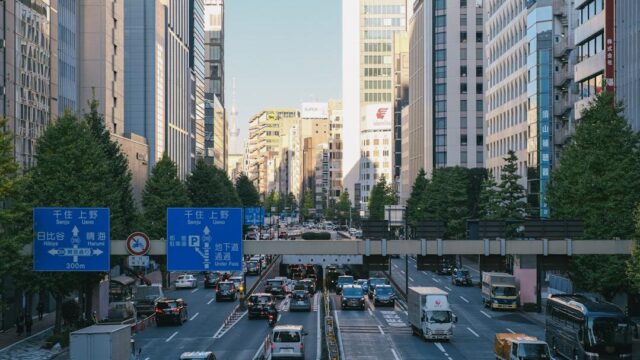
Conversely, Blue signs indicate free, local national or prefectural roads (一般道, Ippando). When you are driving in a city and looking for the highway entrance, you will follow the blue signs until you see a green sign pointing to the “Interchange” (IC). When you are on the expressway and approaching your exit, the sign detailing the local towns you will reach after the toll gate will often have a blue box embedded within the larger green sign. This color system is incredibly reliable. If your navigation app tells you to take local roads to avoid a toll, but you find yourself following a green sign, you have made a wrong turn. For a deeper understanding of how these toll roads operate and how to pay for them, review our guide on How to Use ETC in Japan: A Complete Guide to Electronic Toll Collection.
Warning Signs and Regulatory Signs
The other standard colors follow international conventions but have specific local applications. Yellow diamond-shaped signs are warnings. On the expressways, you will frequently see these depicting crosswinds (a windsock), steep grades, or wildlife (like the Ezo deer if you are driving in Hokkaido). Pay close attention to these, especially on the coastal or mountain routes where conditions change rapidly.
Red circles on a white background are strictly regulatory and mean “Do Not” or indicate a hard limit. The most critical of these is the speed limit sign. You will also see red circles with a red diagonal slash through a symbol, such as a U-turn arrow, indicating the action is strictly prohibited. Blue circles with white arrows are mandatory instruction signs, dictating that you must turn a certain way or follow a specific lane. Never confuse a blue directional rectangle (local road) with a blue regulatory circle (mandatory action).
Decoding Road Lines and Lane Markings
The paint on the asphalt in Japan conveys just as much critical information as the overhead signs. Knowing when you are legally allowed to change lanes and understanding the specific markings near junctions will prevent you from making dangerous, illegal maneuvers.
The Meaning of White and Yellow Lines
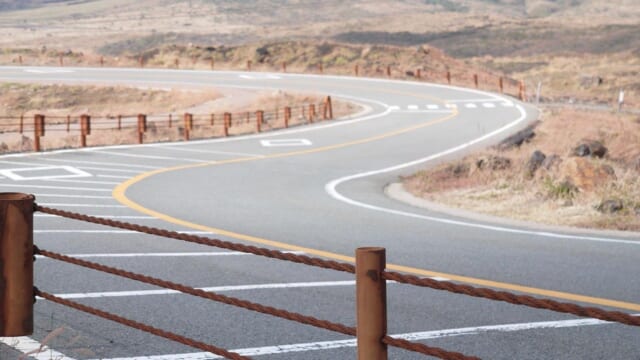
On a multi-lane expressway, the lanes are divided by white lines. A broken (dashed) white line means you are free to change lanes to overtake slower traffic, provided it is safe to do so. However, a solid white line means that lane changes are discouraged and should be executed with extreme caution; they are often placed near tunnels or curves.
The most important line to respect is the solid yellow line. A solid yellow line strictly prohibits lane changes for the purpose of overtaking. You will frequently encounter solid yellow lines just before major interchanges, toll gates, and inside long tunnels. If you realize you are in the wrong lane for your exit but the line has already turned yellow, you are legally required to stay in your lane and miss the exit. Forcing a lane change across a yellow line near an interchange is highly illegal, incredibly dangerous, and heavily monitored by highway police. If you want to know more about how traffic enforcement monitors these behaviors, read our guide on Japanese Highway Speed Limits, Speed Cameras, and Police Explained.
The “Zebra Zones”
As you approach an exit ramp or a fork in the expressway, you will often see a large area painted with diagonal white stripes bordered by a solid white line. This is known colloquially as a “Zebra Zone” (導流帯). These are designed to guide traffic smoothly and safely separate diverging lanes.
While it is technically not a traffic violation to drive over a Zebra Zone if you made a late decision, it is considered highly dangerous and terrible driving etiquette. If an accident occurs while you are driving over a Zebra Zone, you will be assigned a significantly higher percentage of fault by the insurance companies and the police. Always make your lane decisions early based on the overhead green signs, and completely avoid driving over the striped sections.
Reading the VICS Electronic Information Boards
The most dynamic and crucial source of information on a Japanese expressway is the VICS (Vehicle Information and Communication System) electronic message boards. These massive black LED screens span the width of the highway and provide real-time updates on traffic, accidents, and weather.
Understanding the Traffic Light Colors
The VICS boards primarily use three colors to communicate the flow of traffic ahead. When the board displays a simplified map of the highway network, pay close attention to the colored lines drawn over the routes:* Green lines mean the traffic is flowing smoothly at the speed limit.* Orange (or Yellow) lines indicate moderate congestion. You will have to slow down, but traffic is still moving continuously.* Red lines indicate a severe traffic jam (渋滞, Jutai). Traffic is either at a complete standstill or moving at a crawl (usually under 20 km/h).
The boards will also display text. While it is mostly in Japanese, the numbers are universally understandable. For example, if you see “渋滞 5km” in red, it means there is a 5-kilometer traffic jam ahead. If you see “事故“, it means there is an accident. If you see “落下物“, it means there is fallen debris on the road. If the text is accompanied by a flashing red circle with a number inside (e.g., “80”), that is the new, legally enforceable dynamic speed limit due to the hazard ahead. You must reduce your speed immediately to match the board. If you rely heavily on your smartphone, learning how to combine these physical alerts with digital apps is crucial; check out our guide on The Best Highway Driving Apps for Japan for more strategies.
Conclusion
Driving in Japan becomes significantly less stressful once you understand the visual language of the highway infrastructure. The signs and lines are designed to communicate clearly and manage traffic dynamically, ensuring maximum safety for everyone on the road.
To quickly decode the highway environment, keep this summary in mind:
- Green means Go (to the Toll): Green signs always indicate paid expressways, while blue signs indicate free local roads.
- Never cross a solid yellow line: This strictly prohibits lane changes, especially near tunnels and exits. Miss your exit rather than crossing it.
- Avoid the Zebra Zones: Do not drive over the diagonally striped white painted areas near highway forks or exits.
- Read the VICS colors: On electronic boards, Green is clear, Orange is slow, and Red means a severe traffic jam or accident.
- Obey dynamic speed limits: If an electronic board flashes a speed in a red circle, that is the new legal limit you must follow immediately.
By paying close attention to the colors, the lane markings, and the electronic updates, you will navigate the Japanese expressways with the competence and confidence of a local driver.