How to Choose the Right Rental Car Size for Japan
Renting a car in Japan offers unparalleled freedom to explore rural areas, access hidden hot springs, and travel at your own pace without relying on train schedules. However, one of the most common and costly mistakes international travelers make is selecting the wrong size vehicle for their journey. The physical reality of driving in Japan is often drastically different from what tourists are accustomed to in North America or Europe. While the major expressways are wide and well-maintained, the vast majority of local roads, mountain passes, and city streets are incredibly narrow, winding, and unforgiving of oversized vehicles. Choosing a car based solely on passenger capacity or luggage volume, without considering the physical dimensions of the vehicle relative to Japanese infrastructure, can lead to stressful driving experiences, scraped bumpers, and an inability to access certain destinations. This comprehensive guide will help you understand the nuances of Japanese road design and guide you toward selecting the optimal rental car size for a safe and comfortable trip.
The Reality of Japanese Roads
To understand why vehicle size matters so much in Japan, you must first understand the infrastructure. Japan is a densely populated, highly mountainous country where usable flat land is at an absolute premium. Consequently, roads were historically designed for pedestrians, handcarts, and bicycles long before automobiles became commonplace. Even in modern times, local municipalities prioritize maximizing livable space over widening roads, resulting in a driving environment that feels exceptionally tight to foreign drivers.
Navigating the “Michi” (Local Streets)
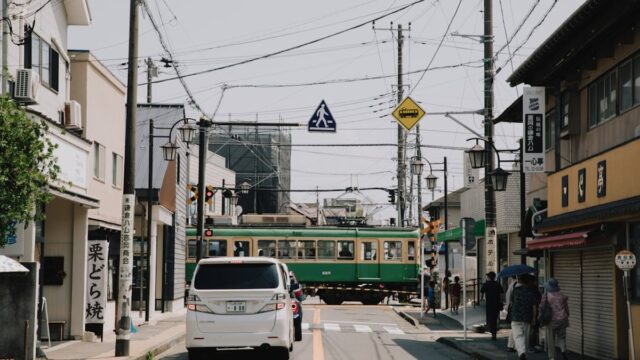
When you exit the wide, multi-lane expressways, you will immediately encounter the reality of standard Japanese local roads. These streets, often referred to simply as *michi*, frequently lack center dividing lines and sidewalks. A standard two-way street in a residential neighborhood or a rural village is often barely wide enough for two compact cars to pass each other slowly. If you are driving a large SUV or a full-sized van, you will constantly find yourself forced to pull over, fold in your mirrors, and edge dangerously close to deep drainage ditches just to let oncoming traffic pass. This constant need to yield and squeeze through tight spaces turns what should be a relaxing drive into a highly stressful, exhausting endeavor. The margin for error is virtually zero, with utility poles often placed directly on the edge of the asphalt rather than set back on a sidewalk. The anxiety of potentially scratching the rental car on an ancient stone wall or a protruding mirror is a constant companion when driving an oversized vehicle on these local routes.
Furthermore, many traditional Ryokans (inns) and local restaurants located off the beaten path are accessed via incredibly narrow, winding alleys. If you rent a vehicle that is too wide or has a poor turning radius, you may literally find it impossible to reach your accommodation’s parking lot. The physical limitations of these local streets are absolute; a large vehicle simply will not fit. Therefore, when choosing a rental car, you must prioritize maneuverability and narrow width over raw passenger space. A smaller car allows you to navigate these tight confines with confidence, reducing anxiety and preventing costly damage to the rental vehicle. You must adapt to the scale of the environment rather than trying to force a large, Western-sized vehicle through it. The peace of mind gained by knowing you can comfortably fit down any road Google Maps suggests is invaluable. Do not let a massive vehicle dictate which remote shrines or hidden cafes you are allowed to visit.
The Challenge of Parking Infrastructure
Even if you manage to navigate the narrow streets, the challenge of parking an oversized vehicle in Japan is immense. Parking spaces, whether in municipal lots, hotel garages, or on the street, are notoriously tight. The standard parking space dimensions in Japan are significantly smaller than in the United States, designed primarily to accommodate domestic compact cars. If you rent a large SUV, you will frequently find that your vehicle overhangs the lines, making it difficult for you to open the doors or for neighboring cars to park. This can lead to door dings, angry notes from locals, or even being denied entry to certain parking facilities.
The situation becomes even more complicated in urban areas, where space constraints have led to the widespread use of automated, multi-level tower parking garages. These mechanical systems utilize elevators and pallets to stack cars vertically. These towers have strict, non-negotiable limitations on vehicle height, width, and weight. If you rent a minivan or a high-clearance SUV, you will be rejected from nearly all tower parking facilities, drastically limiting your options in cities like Kyoto or Tokyo. You will be forced to hunt for rare, expensive open-air surface lots, wasting valuable vacation time. A smaller, lower-profile car guarantees access to a much wider variety of parking solutions, providing significantly more flexibility and peace of mind during your trip.
- Width: This is the most critical dimension. Aim for a vehicle width under 1.8 meters (70 inches) to comfortably navigate local roads and parking spaces.
- Height: If you plan to park in cities, ensure your vehicle is under 1.55 meters (61 inches) to fit into standard mechanical tower parking garages.
- Turning Radius: A tight turning radius (under 5 meters) is essential for navigating sharp corners in rural villages and tight mountain switchbacks.
- Luggage Capacity: Do not just count seats; verify the cubic volume of the trunk *with all seats occupied* to ensure your suitcases will actually fit.
Understanding the “Kei Car” Class
When browsing Japanese rental car websites, you will immediately notice a specific class of vehicle that likely does not exist in your home country: the “Kei car” (K-car or *Keijidosha*). These are ultra-compact, lightweight vehicles characterized by their small engines (strictly limited to 660cc) and distinctive, boxy dimensions. They are distinguished by their yellow license plates (as opposed to the standard white plates) and are incredibly popular in Japan due to tax benefits and their perfect suitability for the local infrastructure.
The Advantages of Kei Cars
For solo travelers or couples with minimal luggage, renting a Kei car can be a highly strategic decision. Their primary advantage is their incredibly small footprint. With a maximum legally mandated width of 1.48 meters (58 inches), a Kei car can effortlessly navigate the narrowest rural alleys, squeeze past oncoming traffic on mountain roads without slowing down, and slide into the tightest parking spaces with ease. They possess an incredibly tight turning radius, making them feel nimble and highly maneuverable. Driving a Kei car through a crowded Japanese town significantly reduces the stress associated with navigating unfamiliar, cramped environments. You will often find yourself effortlessly driving down paths that owners of standard vehicles would immediately dismiss as impassable, unlocking a deeper level of exploration in historic, densely packed neighborhoods.
Furthermore, Kei cars are exceptionally economical. They offer excellent fuel efficiency, which is a major benefit given the relatively high cost of gasoline in Japan. Additionally, because they are classified as lightweight vehicles, the toll fees on the expressways are generally lower than those for standard passenger cars. This can result in significant savings over the course of a multi-day road trip. The initial rental cost is also consistently the cheapest option available on any booking platform. They are the perfect tool for short-distance exploration within a specific region, such as navigating the coastal roads of Okinawa, exploring the art islands of the Seto Inland Sea, or hopping between hot springs in rural Kyushu. If your priority is absolute maneuverability, low operating costs, and stress-free parking in rural areas, the Kei car is an unmatched option. Their boxy design actually maximizes the interior cabin height, making them feel surprisingly spacious inside for two adults, provided the rear seats are folded down to accommodate luggage.
The Limitations of Kei Cars
However, Kei cars are not suitable for every itinerary. Their primary drawback is their severe lack of power. The 660cc engine struggles significantly at high speeds, especially when the vehicle is loaded with passengers and luggage. If your itinerary involves extensive driving on the expressways—such as the mountainous Chuo Expressway or the fast-paced Tomei Expressway—a Kei car will feel dangerously underpowered. You will struggle to merge safely from short on-ramps and will find it difficult to maintain the 100 km/h speed limit on steep inclines, resulting in a noisy, strained driving experience as the engine revs aggressively to keep pace. The lack of acceleration can be genuinely frightening when attempting to pass heavy trucks on a two-lane highway.
Additionally, Kei cars offer very little in terms of safety and comfort during a collision compared to standard vehicles, owing to their minimal crumple zones and lightweight construction. They are highly susceptible to strong crosswinds, which are common on elevated coastal highways and massive suspension bridges. The interior space is also highly compromised. While they technically seat four people by law, putting four adults in a Kei car leaves absolutely zero room for luggage, and the rear seats offer minimal legroom. Therefore, you should only consider a Kei car if your trip consists entirely of low-speed, local driving on flat terrain, and you have no more than two people with small, carry-on-sized bags. For long-haul highway driving, mountainous routes, or family trips, their limitations far outweigh their benefits. Attempting to drive a Kei car from Tokyo to Kyoto, for instance, would be a grueling, uncomfortable, and potentially unsafe endeavor that you would quickly regret.
The Versatility of the Compact Class
For the vast majority of international tourists, the “Compact” class offers the ideal compromise between maneuverability and capability. These vehicles (often models like the Toyota Yaris, Honda Fit, or Nissan Note) are significantly larger and more powerful than Kei cars but still substantially smaller than the sedans or SUVs popular in Western markets. They are the true workhorses of the Japanese rental fleet and represent the smartest choice for a balanced road trip.
Balancing Power and Size
The primary advantage of the Compact class is that it provides sufficient engine power (usually between 1.2L and 1.5L) for safe highway driving without sacrificing the ability to navigate narrow local roads. You can comfortably maintain speed on the expressways, execute safe passing maneuvers, and tackle steep mountain ascents without feeling like the engine is straining or risking overheating. Yet, they remain narrow enough (typically around 1.7 meters wide) to comfortably handle the tight clearances of rural villages and older city streets. They offer a driving experience that feels stable and secure at high speeds while retaining the agility required for local exploration. The suspension in these vehicles is also vastly superior to the Kei cars, providing a much smoother, less fatiguing ride over long distances.
Furthermore, these vehicles easily fit into standard Japanese parking spaces and are almost universally accepted in automated mechanical tower parking garages, ensuring you will never struggle to find a place to park in urban centers. This versatility means you do not have to plan your itinerary around the physical limitations of your vehicle; a Compact car is equally at home on a 6-lane highway or a one-lane dirt road leading to a remote temple. It removes the anxiety associated with driving an oversized vehicle while providing significantly more comfort and safety than a tiny Kei car. For a standard itinerary that mixes highway driving with rural exploration, the Compact class is undoubtedly the most pragmatic option. They represent the “Goldilocks” zone of Japanese rental cars—not too small, not too large, but perfectly scaled to handle the diverse realities of the country’s infrastructure. Reserving a Toyota Yaris or Honda Fit is almost always a guaranteed successful choice for the average tourist.
Managing Luggage Expectations
While Compact cars offer a great balance of size and power, you must be extremely realistic about their luggage capacity. International travelers tend to arrive with large, hard-shell suitcases that can be incredibly difficult to fit into the surprisingly shallow trunks of Japanese compact cars. A standard Toyota Yaris, for example, can comfortably seat four adults, but its trunk will likely only hold one large suitcase and perhaps two small soft duffel bags. If four adults arrive with four large suitcases, they will absolutely not fit in a Compact car, regardless of what the rental agency’s “passenger capacity” rating suggests.
To successfully utilize a Compact car, you must employ strategic packing. If you are traveling as a group of four, strongly consider utilizing Japan’s incredibly efficient luggage forwarding service (Takuhaibin, often branded as Kuroneko Yamato or Black Cat). You can ship your large suitcases directly from your arrival airport to your final hotel for a very reasonable fee, allowing you to rent a smaller, cheaper Compact car and travel with only small overnight bags. If you must carry all your luggage with you, a group of three or four adults will be forced to upgrade to a larger vehicle class, sacrificing maneuverability on narrow roads simply to accommodate their suitcases. Understanding the severe limitations of Japanese trunk space is critical to avoiding a crisis at the rental counter.
| Vehicle Class | Typical Models | Best For | Primary Drawback |
|---|---|---|---|
| Kei Car (K-Class) | Honda N-Box, Daihatsu Tanto | Solo/Couples, local rural driving, tight budgets. | Severely underpowered on highways; zero luggage space with 4 pax. |
| Compact | Toyota Yaris, Honda Fit | Couples/Small Families, mixed highway/local driving. | Limited trunk space for large hard-shell suitcases. |
| Minivan (Standard) | Toyota Voxy, Nissan Serena | Families of 4-5, excessive luggage. | Too tall for most urban tower parking; wide turning radius. |
| SUV | Toyota RAV4, Subaru Forester | Winter driving in Hokkaido, large groups. | Too wide for narrow rural roads; difficult to park in cities. |
Upgrading to Minivans and SUVs
While smaller is generally better in Japan, there are specific scenarios where renting a larger vehicle like a Minivan or an SUV is necessary. If you are traveling with a large family, require substantial luggage space, or are heading into severe winter conditions, the limitations of a Compact car become apparent. However, upgrading to these larger classes requires a clear understanding of the trade-offs you are making regarding maneuverability and parking access.
When to Choose a Minivan
The Japanese Minivan class (featuring models like the Toyota Voxy, Honda StepWGN, or Nissan Serena) is incredibly popular domestically for families. These vehicles are distinctively boxy, maximizing interior volume while attempting to keep the overall footprint relatively small compared to American minivans. They are the only realistic option if you are traveling with five or more people, or if you are a group of four with multiple large suitcases that you refuse to ship via a forwarding service. They offer flexible seating arrangements, sliding doors that are perfect for tight parking spaces, and a comfortable, upright driving position that provides excellent visibility on the highway. For multi-generational trips with grandparents and children, the ease of entry and exit provided by the low floor and sliding doors is highly beneficial.
However, you must be prepared for the consequences of driving a Minivan. While they are surprisingly narrow, they are very tall (often approaching 1.9 meters or 75 inches). This height immediately disqualifies them from nearly all automated mechanical tower parking garages in cities like Tokyo, Kyoto, or Osaka, which typically have a strict 1.55-meter limit. You will be restricted to surface lots, which are often significantly more expensive, highly sought after, and harder to find. Furthermore, their longer wheelbase results in a wider turning radius, making sharp corners on narrow mountain roads significantly more challenging. When driving a Minivan, you must actively plan your route to avoid extremely narrow rural alleys and always confirm that your hotels offer flat surface parking rather than tower garages. It is a necessary compromise for passenger space, but it requires much more careful logistical planning. You must accept that parking will be a recurring challenge in urban environments and factor that extra time into your daily schedule.
The Reality of Renting an SUV
Renting an SUV (like a Toyota RAV4, Subaru Forester, or Nissan X-Trail) is generally not recommended for the average tourist itinerary in Japan, particularly if you are visiting the main island of Honshu. SUVs are simply too wide for comfort on standard Japanese local roads. You will constantly feel stressed when passing oncoming traffic, holding your breath as you squeeze past delivery trucks, and you will find that the vehicle overhangs the painted lines in most standard parking lots, increasing the risk of damage. Unlike in North America, where an SUV is a standard family vehicle, in Japan, they are considered specialized, oversized vehicles that are poorly suited to the dominant infrastructure. The perceived safety of riding high up is quickly replaced by the sheer terror of navigating a 1.85-meter wide vehicle down a street built for ox carts.
The only major exception to this rule is if you are traveling to Hokkaido, Japan’s northernmost island. Hokkaido is characterized by wide, open roads, massive distances, and less dense infrastructure that closely resembles the driving environment of North America. Furthermore, if you are visiting Hokkaido during the winter for skiing, the higher ground clearance and advanced all-wheel-drive systems of an SUV provide a crucial safety advantage in deep snow, preventing you from getting stuck on unplowed side roads. However, if your itinerary is focused on Kyoto, Tokyo, or navigating the historic villages of the Japan Alps, an SUV will be a massive, stressful liability. Do not rent an SUV simply for perceived comfort; the anxiety of navigating it through a tight, ancient village will quickly negate any benefits. Trust the local preference for compact, narrow vehicles; they have evolved perfectly to match the demanding environment of the Japanese road network.
Conclusion
Selecting the appropriate rental car size is perhaps the most crucial decision you will make when planning a road trip in Japan. It dictates not only your comfort but also your access to certain locations, your parking options, and your overall stress levels while driving. The fundamental rule is to always rent the smallest vehicle that can safely accommodate your passengers and essential luggage. By prioritizing maneuverability over excess space, you align yourself with the reality of Japanese infrastructure, ensuring a smoother, safer, and far more enjoyable journey. Ignoring this rule and assuming you can force an oversized SUV through ancient, narrow streets is a guaranteed recipe for scraped paint, broken side mirrors, and ruined vacation days spent dealing with insurance claims.
Resist the urge to upgrade to a larger vehicle simply because it is what you drive at home or because the upgrade fee seems minimal. Embrace the efficiency of the Compact class, utilize luggage forwarding services to minimize the need for massive trunk space, and carefully consider the extreme limitations of Kei cars before opting for the cheapest option. By carefully balancing your specific itinerary requirements against the physical constraints of Japan’s incredibly narrow local roads and tight parking facilities, you ensure that your rental car remains a tool for freedom and exploration, rather than a constant source of anxiety. Thoughtful preparation regarding vehicle size is the foundation of a successful Japanese road trip. Taking the time to understand the unique dimensions of the country’s roads before you book your vehicle will save you immeasurable stress once you are actually behind the wheel, allowing you to focus entirely on the incredible landscapes and destinations that Japan has to offer.