What to Expect During Golden Week and Obon Highway Traffic Jams in Japan
Planning a road trip in Japan is an exciting way to explore the country at your own pace, giving you the freedom to reach hidden gems that trains simply cannot access. However, if your travel dates fall during Golden Week or Obon, you need to prepare for some of the most intense highway traffic jams you will ever experience. These two major national holiday periods see millions of domestic travelers hitting the expressways simultaneously to visit family or enjoy a well-deserved vacation. As a foreign visitor renting a car, getting caught in these massive traffic snarls without prior knowledge can quickly turn a dream road trip into a stressful ordeal. This guide will walk you through exactly what to expect during these peak travel seasons, how to navigate the busy service areas, and most importantly, how to plan your itinerary to minimize time spent staring at the bumper of the car in front of you.
Understanding the Scale of Golden Week and Obon Traffic
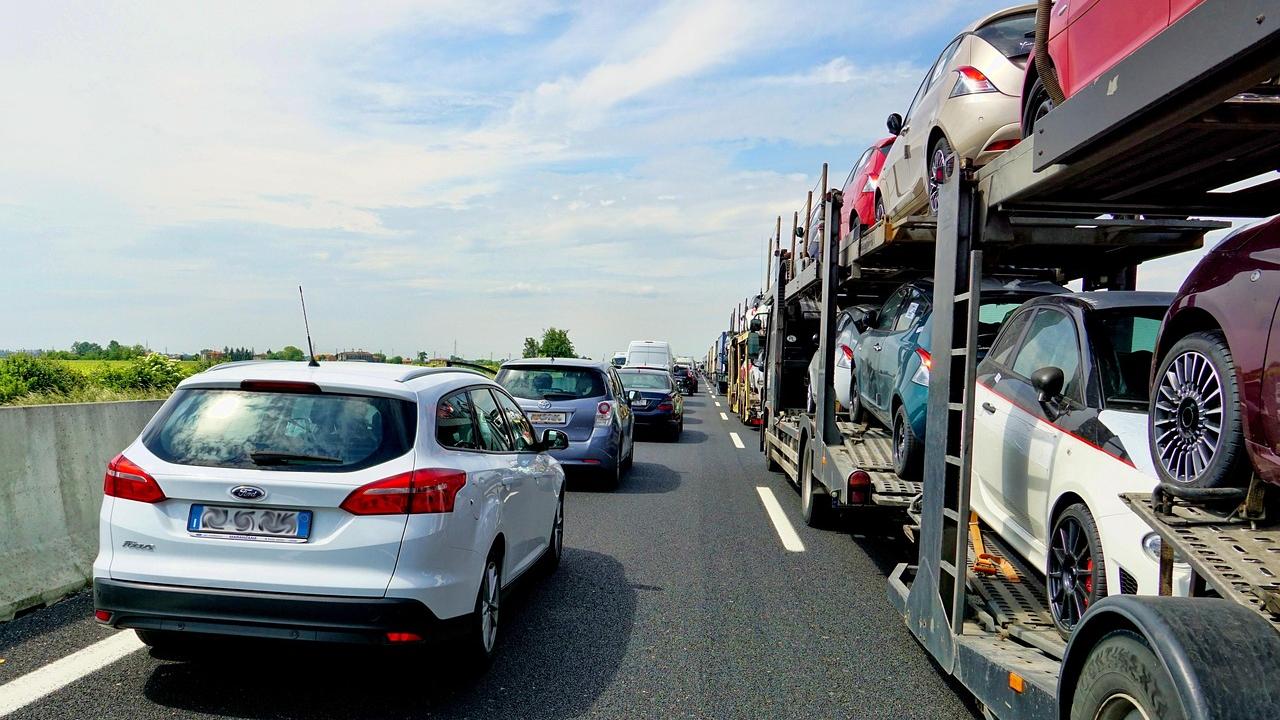
If you have never experienced a major Japanese holiday period on the road, it is difficult to grasp just how congested the highways can become. We are not talking about a minor slowdown during rush hour; we are talking about traffic jams that stretch for tens of kilometers and last for hours. During Golden Week (usually late April to early May) and Obon (mid-August), the sheer volume of vehicles on major routes like the Tomei Expressway, Chuo Expressway, and Tohoku Expressway exceeds the road capacity by a massive margin. It is crucial to understand the timing and flow of this traffic so you can adjust your driving schedule accordingly.
The Outbound and Inbound Rush Phenomena
The traffic patterns during these holidays are highly predictable, following a distinct “outbound” and “inbound” flow that dictates exactly when and where the worst congestion will occur. The “outbound rush” (kisei rush) happens at the very beginning of the holiday period. This is when millions of residents living in major metropolitan areas, particularly Tokyo, Osaka, and Nagoya, pack up their cars and head out to the countryside or their hometowns. If you are trying to leave Tokyo on the first morning of Golden Week, you can expect to hit a wall of brake lights almost immediately after merging onto the expressway. This outbound congestion typically peaks on the first day or two of the holiday, with the worst traffic occurring in the morning hours as everyone tries to get an early start.
Conversely, the “inbound rush” (U-turn rush) happens at the tail end of the holiday period. This is the mass migration of people returning to the cities. The inbound traffic jams are often even more severe and concentrated than the outbound ones, as people tend to maximize their vacation time and drive back at the last possible moment. The peak of the inbound rush usually hits the day before the holiday officially ends, with severe congestion starting in the early afternoon and lasting well into the late evening. For example, the Tomei Expressway heading back into Tokyo frequently sees traffic jams exceeding 40 or even 50 kilometers during the Obon U-turn rush.
To give you a better idea of what these patterns look like in reality, let’s break down the general flow. If you are planning to drive in the opposite direction of the main rush—for instance, driving into Tokyo at the start of the holiday while everyone else is leaving—you might actually find the roads surprisingly empty. However, if your itinerary aligns with the mass exodus, you must factor in significant delays. A drive that normally takes two hours could easily stretch into five or six. This is why checking the traffic forecasts provided by NEXCO (Nippon Expressway Company) before you set out is absolutely vital. They publish detailed predictions weeks in advance, allowing you to see exactly which routes are expected to be congested on which days.
- First morning of the holiday: Outbound routes from major cities will be gridlocked from 6:00 AM to noon.
- Last afternoon of the holiday: Inbound routes to major cities will be severely congested from 2:00 PM to 10:00 PM.
- Peak dates for Golden Week: May 3rd (outbound) and May 5th (inbound) are consistently the worst.
- Peak dates for Obon: August 13th (outbound) and August 15th (inbound) see the heaviest traffic.
Major Expressways with the Worst Congestion
Not all highways in Japan are created equal when it comes to holiday traffic. Some routes are notorious for soul-crushing jams, while others remain relatively manageable even during peak seasons. The Tomei Expressway, which connects Tokyo to Nagoya, is arguably the most infamous route in the country. Because it serves as the primary artery linking the Kanto and Kansai regions, the sheer volume of traffic it handles during Golden Week and Obon is staggering. The section near the Yamato Tunnel in Kanagawa Prefecture is a particularly well-known bottleneck where traffic slows to a crawl almost inevitably.
Similarly, the Chuo Expressway, offering a scenic route through the mountains towards Nagano and Yamanashi, becomes heavily congested with holidaymakers heading to popular nature resorts and summer getaways. The Kobotoke Tunnel section on the Chuo Expressway is another legendary choke point where 30-kilometer backups are common, often stalling traffic for hours on end. Meanwhile, the Tohoku Expressway heading north from Tokyo towards Sendai and Aomori sees its fair share of heavy traffic, especially during the outbound rush of Obon when many families return to the northern provinces. The Tohoku Expressway’s Yaita Interchange is famous for severe delays, sometimes doubling the normal driving time.
If your travel plans require you to use any of these major arteries during the peak rush days, you need a solid strategy. One option is to rely heavily on your car’s navigation system or smartphone map apps that feature real-time traffic updates. These systems can often suggest alternative routes, though you should be warned that during the absolute peak hours of Golden Week, even the smaller bypass roads can become clogged as locals attempt to avoid the expressway chaos. It is highly recommended to tune into the local highway radio at 1620 kHz, which provides up-to-the-minute updates on congestion lengths, accidents, and estimated travel times to major interchanges. Even if your Japanese is limited, hearing the names of the interchanges and the word “jutai” (traffic jam) can give you a crucial heads-up.
| Expressway | Notorious Bottleneck | Typical Peak Jam Length |
|---|---|---|
| Tomei Expressway | Yamato Tunnel | 30 – 50 km |
| Chuo Expressway | Kobotoke Tunnel | 25 – 40 km |
| Tohoku Expressway | Yaita IC area | 20 – 35 km |
| Kan-Etsu Expressway | Hanazono IC area | 25 – 40 km |
Navigating Service Areas During Peak Crowds
Japanese highway Service Areas (SA) and Parking Areas (PA) are normally highlights of a road trip, offering fantastic food, clean facilities, and great souvenirs. However, during Golden Week and Obon, these rest stops transform into intensely crowded hubs. The volume of people trying to use the facilities, grab a meal, or simply take a break can be overwhelming. Finding a parking spot becomes a competitive sport, and the lines for the restrooms and food stalls can stretch out the doors. Knowing how to handle these crowded rest stops will save you a lot of frustration and keep your road trip moving smoothly.
Parking Challenges and Strategies
The most immediate challenge you will face at a Service Area during a major holiday traffic jam is simply finding a place to park your rental car. As you approach a popular SA, you might find a line of cars waiting on the highway shoulder just to get into the parking lot. Once inside, the lot will be packed to capacity, with staff members frantically waving light wands to direct vehicles to any newly opened spots. It is a chaotic scene that requires patience and a bit of strategic thinking.
One of the best strategies is to avoid the massive, famous Service Areas like Ebina SA on the Tomei Expressway or Dango-zaka SA on the Chuo Expressway during peak hours. While these stops offer the best food and shopping, they also draw the largest crowds. Instead, aim for the smaller Parking Areas (PA). PAs generally have fewer amenities—perhaps just a restroom and a few vending machines—but they are much easier to pull into when you just need a quick break to stretch your legs or use the facilities.
If you must stop at a large SA, timing is everything. Try to time your breaks for off-peak hours, such as mid-morning (around 10:00 AM) or mid-afternoon (around 3:00 PM), avoiding the lunch rush entirely. When you do enter a crowded lot, pay close attention to the parking attendants. They are highly efficient at managing the flow of cars and will guide you to a spot much faster than if you try to hunt for one yourself. Also, be aware that large SAs have electronic signs at the entrance displaying parking availability; if you see a red “Full” (満車) sign and you don’t desperately need to stop, it might be wise to push on to the next one.
Managing Food and Restroom Lines
Once you have successfully parked your car, the next hurdle is navigating the crowds inside the Service Area building. The food courts, usually a quick and convenient option, will be swamped. Finding a vacant table can take 20 minutes, and the lines for popular ramen or rice bowl stalls will be daunting. If you are traveling with a group, a good tactic is to divide and conquer: have one person secure a table while the others stand in line to order food.
If you want to avoid the food court crowds entirely, look for the outdoor food stalls (yatai) that are often set up during these busy holiday periods. They sell quick snacks like yakitori (grilled chicken skewers), takoyaki (octopus balls), and soft-serve ice cream. These are perfect for grabbing a quick bite to eat in your car. Alternatively, make sure you stock up on snacks, onigiri (rice balls), and drinks at a local convenience store before you even get on the highway. Having your own food supply means you can bypass the SA food lines completely and just use the rest stops for quick bathroom breaks.
Speaking of bathrooms, the lines for the women’s restrooms at major SAs during Golden Week and Obon can be legendary. While Japanese highway restrooms are incredibly clean and efficient, the sheer volume of users means a wait is inevitable. To minimize this, again, smaller PAs are your friend. They might not have the high-tech washlets or fancy powder rooms of the big SAs, but you can usually get in and out much faster. It is always a good idea to encourage everyone in your car to use the restroom at every stop, even if they don’t feel an urgent need, because you never know how long it will be until the next accessible facility.
Smart Driving Tactics for Heavy Traffic
When you are stuck in a 30-kilometer traffic jam on a Japanese expressway, frustration is a natural response. However, getting angry won’t make the cars move any faster. Instead, you need to employ smart driving tactics to stay safe, preserve your sanity, and handle the unique driving etiquette found on Japanese roads during extreme congestion. Renting a car in a foreign country is already a demanding task; adding bumper-to-bumper holiday traffic into the mix requires a calm and calculated approach.
Utilizing ETC and Smart Interchanges
If there is one non-negotiable rule for driving in Japan during Golden Week or Obon, it is that your rental car must be equipped with an ETC (Electronic Toll Collection) card. The manual toll booths, where drivers have to stop, hand over a ticket, and pay with cash or a credit card, become massive bottlenecks during heavy traffic. Cars without ETC cards will find themselves sitting in long lines just to exit the highway. With an ETC card, you can glide through the dedicated purple ETC lanes at a slow roll, bypassing the manual payment queues entirely.
Beyond just saving time at regular toll gates, an ETC card gives you access to “Smart Interchanges.” These are smaller, automated toll gates often connected directly to Service Areas or local roads. They are exclusively for vehicles equipped with ETC. During a massive traffic jam, a Smart Interchange can be a lifesaver. If your navigation app shows that the highway ahead is completely gridlocked, you can use a Smart Interchange to exit the expressway early and take local roads to bypass the worst of the congestion.
Make sure you confirm with your rental car agency that your vehicle comes with a built-in ETC reader and that you are renting the actual ETC card itself. You cannot use a regular credit card in the ETC machine; it requires a specific IC card issued by Japanese tolling authorities. Almost all major rental companies cater to foreign tourists by offering ETC cards for a small rental fee (usually around 300 yen plus the cost of the tolls you incur). This small investment will save you hours of sitting in line at toll plazas during a holiday rush. Furthermore, some rental agencies offer expressway passes specifically for international visitors, such as the Japan Expressway Pass (JEP), which allows unlimited expressway use for a flat fee. When combined with the ETC system, this not only saves you significant amounts of money on long cross-country drives but also completely eliminates the stress of calculating toll costs while navigating heavy traffic.
Maintaining Proper Following Distance and Patience
The driving culture in Japan is generally very polite and orderly, and this extends to how people handle traffic jams. You will rarely see aggressive lane weaving or road rage incidents, even when traffic is at a dead stop. As a foreign driver, the best thing you can do is match this calm demeanor. Keep a safe following distance from the car in front of you, even when moving at a crawl. Sudden stops are frequent in heavy congestion, and rear-end collisions are the most common type of accident during these holiday jams.
One thing you might notice is that Japanese drivers are very good about using the “zipper merge” technique when lanes combine or when cars are merging from an on-ramp. They take turns, one car from the left, one from the right, smoothly and efficiently. Do not try to aggressively block a merging car; instead, fall into the rhythm and let one vehicle in ahead of you. It is also common courtesy in Japan to flash your hazard lights two or three times to say “thank you” after someone lets you merge. Learning this small gesture will go a long way in maintaining good relations on the road.
Finally, mental preparation is key. Make sure your car is comfortable. Keep the air conditioning running, have a great playlist or podcast ready, and ensure you have plenty of drinking water within reach. Dehydration and fatigue can sneak up on you when you are sitting in a hot car moving at 5 km/h for three hours. If you start to feel overly tired or frustrated, pull into the nearest PA and take a 15-minute nap in your seat. Pushing through exhaustion in heavy traffic is dangerous, and arriving at your destination a bit later is always preferable to not arriving at all.
Alternative Travel Strategies
If the thought of sitting in massive traffic jams sounds completely unappealing, there are strategies you can employ to avoid the worst of the Golden Week and Obon highway chaos. It requires flexibility in your planning and perhaps waking up a bit earlier than you’d prefer on a vacation, but the reward of cruising down an open highway while millions of others are stuck in gridlock is well worth the effort.
Driving Late at Night or Early Morning
The most effective way to beat the holiday traffic is simply not to be on the road when everyone else is. As discussed earlier, the outbound rush peaks in the morning, and the inbound rush peaks in the afternoon and evening. This leaves the deep night and very early morning hours as your best window for travel. If you are willing to adjust your sleep schedule, driving between midnight and 5:00 AM is the ultimate hack for Japanese road trips during peak seasons.
Not only are the roads significantly clearer during these off-hours, but you also get the added benefit of discounted tolls. The Japanese expressway system offers a “Late Night Discount” (深夜割引) for vehicles using an ETC card between midnight and 4:00 AM. This discount cuts your toll fees by a substantial 30%, which adds up quickly on long-distance drives. Cruising down the Tomei Expressway at 2:00 AM allows you to maintain the speed limit, save money, and arrive at your destination refreshed and ready to explore before the crowds wake up.
However, night driving comes with its own set of challenges. The visibility is reduced, and you must be extra vigilant for large commercial trucks that heavily utilize the highways at night to avoid the daytime passenger car traffic. Fatigue is also a major risk. If you choose this strategy, make sure the designated driver has had plenty of rest beforehand, and do not hesitate to pull into a PA to sleep if you feel drowsy. Many Japanese drivers do exactly this, so you will see parking lots full of cars with sleeping occupants during the night.
Leveraging Local Bypass Routes
If driving in the middle of the night doesn’t fit your itinerary, your next best defense against highway gridlock is knowing when to get off the expressway and use the local roads. Japan has an extensive and well-maintained network of national routes (kokudo) that run roughly parallel to the major expressways. While these local roads have lower speed limits and traffic lights, they can sometimes be faster than sitting stationary on the highway.
Your rental car’s GPS and modern smartphone apps like Google Maps are usually very good at detecting when a local route will save you time. If the app suggests taking an exit and switching to a national route, it is generally wise to follow that advice during a major holiday. However, a word of caution: during the absolute peak of Golden Week, even these local bypass routes can become congested as thousands of other drivers get the same idea.
To effectively use local roads, it helps to do a little route planning before you leave your hotel. Identify the major national routes that parallel your journey. For example, National Route 1 runs along the Pacific coast and can serve as an alternative to parts of the Tomei Expressway, though it is a busy road itself. National Route 20 parallels the Chuo Expressway through the mountains. Driving these local roads also offers a different perspective on the Japanese countryside, taking you through small towns and scenic landscapes that you would completely miss from the elevated highway. However, keep in mind that local roads have a maximum speed limit of 50 to 60 km/h and are frequently interrupted by traffic lights and pedestrian crossings. You must weigh the benefit of constant, slow movement on a local road against the frustration of sitting stationary on an expressway. In some cases, staying on the expressway and waiting out the jam is actually the faster option, so always trust the estimated arrival times provided by your GPS navigation system.
Preparing Your Vehicle and Passengers
A successful road trip during Japan’s busiest holidays requires more than just a good route plan; it requires proper preparation of your vehicle and the people inside it. When you are moving at a snail’s pace for hours on end, any small issue—a low gas tank, a hungry passenger, or a lack of entertainment—can quickly escalate into a major problem. Taking 30 minutes to prepare before you hit the road will make the journey infinitely more comfortable for everyone.
Fuel Management and Rest Stop Planning
Running out of gas on a Japanese expressway is a nightmare scenario at any time, but during a Golden Week traffic jam, it is a disaster. Tow trucks will have a difficult time reaching you, and you will be holding up thousands of already frustrated drivers. The golden rule for holiday driving is to never let your gas tank drop below the halfway mark. Fill up your tank completely before you even get on the highway.
While many large Service Areas have gas stations, the lines to use them during a major traffic jam can be incredibly long. You do not want to be in a position where you are forced to wait 45 minutes for gas because your tank is running on fumes. Keep an eye on your fuel gauge, and if you drop below half, make it a priority to top up at the next available SA, regardless of how long the line is. It is also important to note that gas prices at highway SAs are generally slightly higher than at local stations in town, so filling up before your trip saves money as well as stress.
In addition to fuel, you need a plan for managing your stops. As mentioned, the large SAs will be packed. Discuss with your passengers ahead of time and agree that you will prioritize smaller PAs for quick bathroom breaks and only stop at large SAs if absolutely necessary for a meal or gas. Having this understanding beforehand prevents arguments when the driver bypasses a massive, crowded SA that a passenger wanted to explore. It is also wise to designate one person as the navigator who monitors the traffic apps and anticipates the next available rest stop. When the traffic is moving at 10 km/h, the distance to the next PA might only be 5 kilometers, but it could take 30 minutes to reach it. Anticipating these delays and stopping before anyone in the car becomes desperately uncomfortable is the hallmark of a well-planned and smoothly executed Japanese road trip.
In-Car Entertainment and Comfort Essentials
When the scenery outside your window hasn’t changed for 20 minutes, the atmosphere inside the car becomes very important. Keeping passengers, especially children, entertained and comfortable is vital for maintaining peace during a long traffic jam. Make sure you have downloaded plenty of offline entertainment before you leave your hotel. Podcasts, audiobooks, and music playlists are essential. Do not rely solely on streaming, as cellular data coverage can sometimes be spotty in the mountainous regions that many Japanese expressways cut through.
Comfort essentials are just as important. The climate control should be set comfortably, but also consider bringing travel pillows, lightweight blankets, and even a small cooler bag. Pack the cooler with cold drinks, fresh fruit, and easy-to-eat sandwiches. Having cold water readily available is crucial for staying hydrated, and a quick snack can do wonders for boosting morale when the traffic seems endless. If you are traveling in the summer during the Obon holiday, the heat radiating from the surrounding cars can make the air conditioning work overtime, so having sunshades for the windows can keep the interior significantly cooler.
Finally, consider keeping a small trash bag in the car. You will accumulate empty bottles and snack wrappers over a long journey, and having a dedicated place to put them keeps the car interior tidy and less stressful. You can easily dispose of the trash in the designated bins at any SA or PA when you finally make a stop. Taking care of these small details transforms the car from a cramped, frustrating box into a comfortable mobile living room while you wait for the traffic to clear. By proactively addressing passenger comfort, you drastically reduce the chances of travel fatigue and irritability, ensuring that the road trip remains a positive memory for everyone involved.
Conclusion
Navigating the Japanese expressways during Golden Week or Obon is undeniably challenging, but it is entirely manageable if you approach it with the right mindset and proper preparation. The sheer volume of cars on the road during these national holidays is a spectacle in itself, representing millions of people embarking on well-deserved vacations or returning to their ancestral homes. While getting caught in a 30-kilometer traffic jam is nobody’s idea of fun, understanding the predictable patterns of the outbound and inbound rushes allows you to plan your itinerary to avoid the worst of the congestion. By strategically timing your drives for the early morning or late night hours, you can bypass the gridlock entirely, take advantage of discounted tolls, and enjoy a much smoother journey.
When you do find yourself on a busy highway, utilizing the smaller Parking Areas instead of the massive Service Areas will save you significant time and frustration. Remembering to rent a car equipped with an ETC card is perhaps the single most important piece of advice, as it allows you to utilize Smart Interchanges to escape congested routes and prevents you from getting stuck at manual toll booths. Most importantly, bringing a patient and polite attitude to the driver’s seat will ensure you blend in perfectly with the local driving culture, where courtesy and safety remain paramount even in the most frustrating traffic conditions. With your route planned, your car fueled and stocked with snacks, and a solid understanding of the traffic flow, you are fully equipped to handle a Japanese holiday road trip. You can focus on enjoying the stunning landscapes and the unique experiences that await at your destination, knowing you have mastered one of the most demanding driving environments in the country. Your preparation will pay off immensely, allowing you to create unforgettable memories rather than stressful stories about being stuck on the asphalt.