Japan Expressway Pass (JEP) Discontinued: Guide to Regional Highway Passes
For years, the Japan Expressway Pass (JEP) was the ultimate secret weapon for international tourists planning extensive road trips across the country. It offered unlimited use of the national highway network for a flat fee, making massive cross-country drives incredibly cost-effective. However, the travel landscape in Japan has shifted significantly. As of recent updates, the nationwide Japan Expressway Pass (JEP) is no longer available for purchase. Furthermore, the highly popular Central Nippon Expressway Pass (CEP) also ceased new bookings in late 2024.
While the loss of a single, nationwide pass might seem like a major setback for budget-conscious road trippers, it is not the end of affordable driving in Japan. The highway operators (NEXCO) have shifted their focus to promoting Regional Expressway Passes. These passes operate on the exact same unlimited, flat-fee principle as the old JEP, but they are localized to specific geographic areas. If you are planning a trip focused on exploring a specific island or region—such as Hokkaido, Kyushu, or Tohoku—these regional passes offer immense value. This guide will clarify the current status of highway passes in Japan, explain how the regional alternatives work, and help you determine which pass is the right fit for your itinerary.
The End of the Nationwide Japan Expressway Pass (JEP)
The discontinuation of the JEP means that travelers must fundamentally adjust how they plan their driving budgets, especially for long-haul, multi-region trips like driving from Tokyo all the way to Hiroshima.
Why the JEP and CEP are No Longer Available
The nationwide Japan Expressway Pass was originally introduced to heavily incentivize foreign tourism and encourage visitors to explore rural areas outside the typical Tokyo-Kyoto Golden Route. However, as inbound tourism to Japan surged and travel patterns evolved post-pandemic, the highway operators re-evaluated their pass offerings. The decision was made to suspend the national JEP and, subsequently, the Central Nippon Expressway Pass (CEP).
This shift reflects a strategy to encourage more focused, localized tourism rather than rapid cross-country transit. By removing the national pass, travelers are implicitly encouraged to spend more time deeply exploring one specific region—like the northern wilderness of Hokkaido or the hot springs of Kyushu—rather than spending days continuously driving on the Tomei and Meishin expressways. If you arrive at a rental counter today asking for a JEP or CEP, the staff will inform you that the programs have been terminated. It is crucial to update your travel plans to reflect this reality so you are not caught off guard by unexpected toll fees.
How to Budget for Highway Tolls Without a National Pass
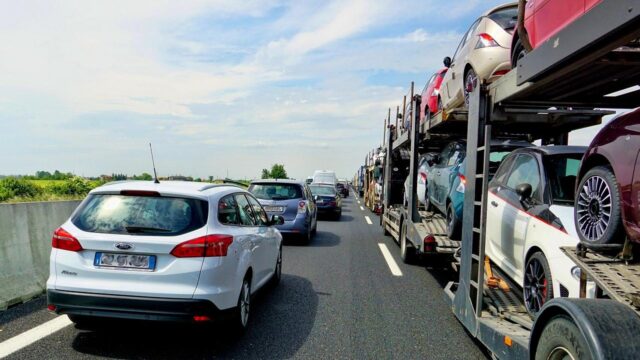
If your itinerary absolutely requires driving across multiple regions (e.g., Tokyo to Osaka to Hiroshima), you will now have to pay standard point-to-point tolls. Japanese expressways are expensive; driving from Tokyo to Kyoto, for instance, costs roughly 10,000 yen (about $70 USD) one way.
To manage these costs without a pass, your best strategy is to ensure you rent an ETC (Electronic Toll Collection) card from your car rental agency. While it does not offer unlimited driving, the ETC card automatically qualifies you for standard highway discounts. The most significant of these is the Late-Night Discount, which slashes your toll fee by 30% if you are on the expressway between midnight and 4:00 AM. There is also a Holiday Discount that applies a 30% reduction on rural expressways during weekends and national holidays. By strategically timing your longest drives to align with these discount windows, you can still significantly reduce your overall travel costs without relying on a discontinued pass.
Understanding Regional Expressway Passes
While the national pass is gone, the regional passes remain active and highly lucrative for travelers focusing on specific areas. The mechanics of these passes are identical to the old JEP system.
How Regional Unlimited Toll Passes Work
A regional expressway pass (like the HEP for Hokkaido or the KEP for Kyushu) is a digital authorization that provides unlimited use of designated highways within a specific region for a flat, pre-paid fee over a consecutive number of days (usually ranging from 2 to 14 days).
Just like the old JEP, these regional passes are not physical tickets. They are digitally linked directly to the ETC card provided by your car rental agency. When you drive through the purple ETC lanes at a toll plaza within the pass’s coverage area, the system reads the card, the gate opens, and the charge is essentially zeroed out in the rental agency’s backend system. You can get on and off the highway as many times as you like within the region without paying any additional fees. However, the “regional” aspect is strictly enforced. If you drive outside the designated coverage map, the ETC card will record standard tolls for those specific segments, and you will be billed for them when you return your rental car.
Booking Your Pass Through a Car Rental Agency
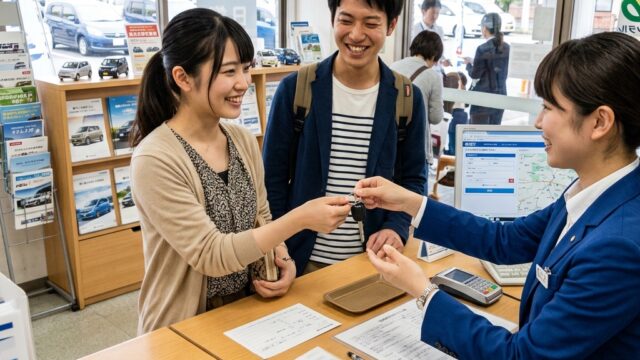
The most critical rule for obtaining any regional expressway pass is that you cannot buy it independently; it must be purchased in conjunction with a rental car from an authorized agency in Japan, such as Toyota Rent a Car, Nippon Rent-A-Car, or Times Car Rental.
Furthermore, you must request the specific regional pass at the exact same time you make your online vehicle reservation. Look for the “Options” or “Extras” menu during the booking process and select the relevant pass (e.g., HEP) along with the required ETC card. The rental agency needs this advance notice to properly prepare and program the ETC card for your arrival. When you pick up the car, you must present your passport showing your “Temporary Visitor” tourist stamp, as these passes are strictly prohibited for use by foreign residents living in Japan. You pay the flat fee for the pass upfront at the counter, and from that moment on, your highway driving within that region is completely covered.
Exploring the Hokkaido Expressway Pass (HEP)
Hokkaido, the massive northern island of Japan, is arguably the best region in the country for a road trip. Its vast distances and limited train network make renting a car essential, and the HEP is the perfect tool for the job.
Essential Coverage for Northern Road Trips
The Hokkaido Expressway Pass (HEP) covers the entire expressway network on the island. Because Hokkaido is so expansive, driving between major tourist hubs—like Sapporo, Hakodate in the south, and Asahikawa or Furano in the center—takes several hours on the highway.
For example, driving from New Chitose Airport (near Sapporo) down to Hakodate costs roughly 6,000 yen in tolls each way. The HEP offers fantastic value for these long distances. A 7-day HEP costs approximately 8,200 yen, and a 14-day pass costs 12,000 yen (prices subject to change). As you can see, a single round trip from Sapporo to Hakodate more than pays for a 7-day pass. If you are planning to spend a week or two exploring the national parks, lavender fields, and coastal roads of Hokkaido, purchasing the HEP is an absolute no-brainer that will save you a substantial amount of money.
Calculating if the HEP is Worth the Cost
While the HEP is generally a fantastic deal, it is not necessary for every Hokkaido itinerary. The value depends entirely on how much ground you plan to cover.
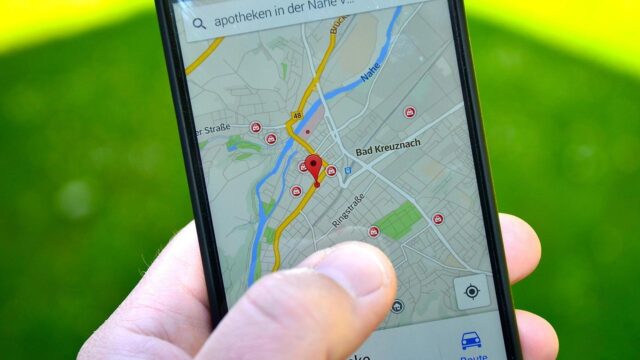
If you are flying into Sapporo and only renting a car for two days to take a short drive to the nearby hot spring town of Jozankei or the historical port city of Otaru, the tolls will be minimal. In this case, paying the flat fee for a multi-day HEP would likely cost more than just paying the individual tolls with a standard ETC card. Before purchasing the pass, use a tool like Google Maps to estimate the driving times and toll costs between your planned destinations. If you are sticking strictly to one small corner of Hokkaido, skip the pass. If you are embarking on a grand loop of the island, the HEP is your best investment.
Navigating the South with the Kyushu Expressway Pass (KEP)
Kyushu, Japan’s southernmost main island, is famous for its dramatic volcanic landscapes, world-class hot springs, and rich history. Like Hokkaido, it is best explored by car, making the KEP a highly valuable asset.
Exploring Kyushu’s Volcanic Landscapes by Car
The Kyushu Expressway Pass (KEP) provides unlimited access to the major expressways crisscrossing the island. This is incredibly useful because Kyushu’s top attractions are spread far apart.
If you rent a car in Fukuoka (the largest city in the north) and plan to drive down to the active volcano of Mt. Aso, then over to the famous hot spring resorts of Beppu or Kurokawa Onsen, and perhaps further south to Kagoshima, your toll bills will accumulate rapidly. The KEP mitigates this entirely. Similar to the HEP, you select a duration (from 2 to 10 days) and pay a flat fee. For an ambitious traveler looking to experience the diverse natural beauty of Kyushu without worrying about the financial penalty of constantly hopping on and off the highway to visit remote onsen towns, the KEP provides both massive savings and peace of mind.
Important Exclusions within the Kyushu Network
While the KEP covers the vast majority of the island, it is vital to be aware of its specific exclusions to avoid surprise charges when you return your rental car.
The KEP does not cover the Fukuoka Urban Expressway (the elevated highway network within Fukuoka city limits) or the Kitakyushu Urban Expressway. Furthermore, it does not cover the Kanmon Bridge, which connects Kyushu to the main island of Honshu. If you drive your rental car across the bridge to visit Shimonoseki, or if you use the urban expressways to bypass city traffic in Fukuoka, the ETC card will record those specific charges. You will be required to pay for those excluded segments out-of-pocket at the rental counter. Always check the official KEP coverage map provided by the rental agency before you start driving.
Other Active Regional Passes (TEP and SEP)
Beyond Hokkaido and Kyushu, there are two other notable regional passes that remain active and highly useful for exploring specific, less-touristed areas of Japan.
The Tohoku Expressway Pass (TEP)
The Tohoku region comprises the northern part of the main island of Honshu (north of Tokyo). It is a rugged, beautiful area known for dramatic autumn foliage, heavy winter snows, and deep cultural traditions.
The Tohoku Expressway Pass (TEP) offers unlimited driving across this vast region. Because Tohoku is incredibly expansive and less populated than central Japan, the driving distances between major sites like the lakes of Aomori, the temples of Hiraizumi, and the coastlines of Miyagi are significant. If you are planning a comprehensive road trip through the north, the TEP is highly recommended. However, it is crucial to note that the TEP coverage ends as you approach the Kanto region (the area around Tokyo). If you rent a car in Tokyo and drive north, you will have to pay the standard tolls until you cross into the designated TEP coverage zone.
The San’in-Setouchi-Shikoku Expressway Pass (SEP)
For travelers looking to explore western Japan off the Golden Route, the San’in-Setouchi-Shikoku Expressway Pass (SEP) is an incredibly powerful tool.
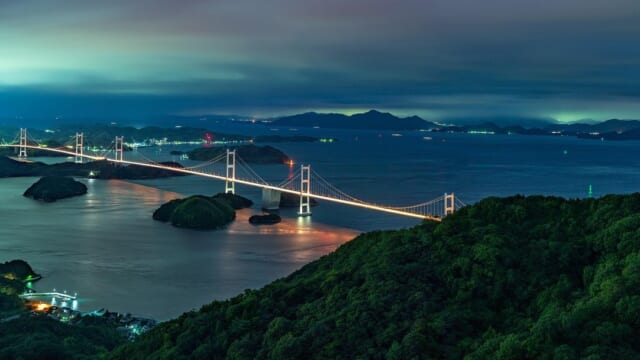
This pass covers a massive, fascinating area that includes the San’in coast (facing the Sea of Japan), the Setouchi region (the inland sea area around Hiroshima and Okayama), and the entire island of Shikoku. This region is famous for the floating torii gate of Miyajima, the art islands of the Seto Inland Sea, and the remote Iya Valley in Shikoku. The SEP allows you to seamlessly drive between these distinct areas. Crucially, the SEP does cover the tolls for the massive bridge systems connecting Honshu to Shikoku (such as the Shimanami Kaido or the Seto-Ohashi Bridge), which are notoriously expensive. If a comprehensive exploration of western Japan and Shikoku is on your itinerary, the SEP is perhaps the most valuable regional pass currently available.
Conclusion
While the discontinuation of the nationwide Japan Expressway Pass (JEP) requires a shift in how international tourists plan their driving budgets, the Japanese highway system remains highly accessible through its robust lineup of Regional Expressway Passes.
The key to a successful and cost-effective road trip in Japan today is geographic focus. Instead of attempting to drive from Tokyo to Kyushu—which will now incur massive standard toll fees—travelers should consider flying or taking the Shinkansen (bullet train) to a specific region, renting a car locally, and utilizing a regional pass. Whether you are chasing the endless horizons of Hokkaido with the HEP, exploring the volcanic hot springs of Kyushu with the KEP, or discovering the hidden temples of Shikoku with the SEP, these regional passes offer the exact same unlimited freedom and financial peace of mind that the old JEP provided. By carefully mapping your route, calculating your estimated tolls, and booking your regional pass in advance with your rental car, you can continue to enjoy the incredible experience of a Japanese road trip without breaking the bank.