Best Wi-Fi & eSIM Options for a Seamless Japan Road Trip

Embarking on a road trip across Japan requires more than just an International Driving Permit and a rental car reservation; it absolutely requires a reliable, high-speed internet connection. In modern Japan, having constant access to data is not a luxury—it is an absolute necessity for navigation, translation, and communication. While your rental car will likely have a built-in GPS, relying solely on an outdated car navigation system when trying to find a hidden rural hot spring or check real-time highway closures is a recipe for frustration.
To guarantee a smooth journey, you need your smartphone to act as your co-pilot, streaming Google Maps, translating complex parking signs, and locating the nearest Service Area (SA) when you need a break. But with so many options available—from traditional pocket Wi-Fi routers to modern eSIMs—choosing the right connectivity solution can be overwhelming. This guide breaks down the best Wi-Fi and eSIM options specifically tailored for international travelers planning a road trip on Japan’s expansive highway network.
The Importance of Connectivity on the Road
Before comparing the specific products, it is crucial to understand exactly why you need continuous data access while driving in Japan. It goes far beyond simply posting photos of Mount Fuji to social media.
In a country where English signage can be sparse outside of major cities, your smartphone is your primary survival tool.
Real-Time Navigation and Traffic Updates
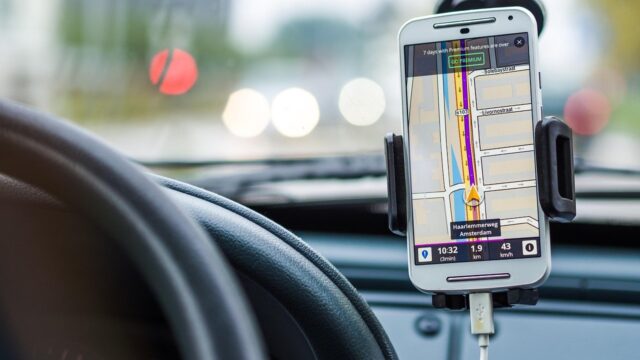
The most critical use for your data connection is real-time navigation. While Japanese rental cars come with GPS, the interfaces can be clunky, and searching for specific English addresses is notoriously difficult. Using Google Maps or local apps like Navitime on your smartphone is vastly superior.
More importantly, your phone provides live traffic updates. If there is a massive accident on the Tomei Expressway causing a 10-kilometer traffic jam, Google Maps will immediately route you around it or suggest pulling into a Service Area to wait it out. It will also warn you about temporary highway closures due to heavy snow or sudden typhoons. The built-in car GPS systems often do not process this real-time data quickly enough to save you from sitting in gridlock.
Translation and Emergency Support
Driving in rural Japan means you will encounter situations where no English is spoken or written. You will need your data connection to use Google Translate’s camera feature to read confusing parking lot rules, understand complex menus at highway food courts, or figure out what kind of fuel a small, unstaffed gas station requires.
In the unlikely event of a breakdown or an accident, you will need data to contact your rental car agency’s emergency support line (often via internet-based calling apps if you do not have a Japanese phone number). The ability to drop a precise GPS pin on a messaging app to show a tow truck exactly where you are on the side of a mountain road is invaluable. For more details on what to do in these situations, you can read our guide on Emergency on a Japanese Highway: How to Call for Help.
Option 1: The Modern Convenience of eSIMs
For the vast majority of modern travelers, an eSIM (embedded SIM) is the absolute best connectivity option for a Japanese road trip. If you have a relatively new smartphone (iPhone XR or newer, and most recent Android flagships), your phone already has the hardware built-in to support an eSIM.
An eSIM allows you to download a digital data plan directly to your phone without ever needing to physically swap out your home SIM card. It is entirely digital, instant, and incredibly convenient.
Top eSIM Providers for Japan
The market for travel eSIMs has exploded, and two providers consistently rank at the top for reliability and ease of use in Japan: Airalo and Ubigi.
Airalo is highly popular due to its user-friendly app and very competitive pricing. They offer a specific Japan package called “Moshi Moshi,” which provides various data buckets (e.g., 10GB for 30 days) running on the major Japanese networks (Softbank or KDDI). Ubigi is another excellent option; it is often praised for slightly faster speeds in rural areas because it frequently utilizes the NTT Docomo network, which has the most extensive coverage in the deep mountains of Japan.
Setting up an eSIM takes less than five minutes. You purchase the plan through their app while you are still in your home country, download the eSIM profile over your home Wi-Fi, and simply activate it the moment your plane lands in Tokyo. There is no waiting in line at airport kiosks and no risk of losing your tiny home SIM card.
The Pros and Cons of eSIMs for Driving
The primary advantage of an eSIM for a road trip is seamless integration. Your phone is immediately connected, allowing you to use it for navigation while simultaneously keeping your home phone number active to receive urgent text messages (like credit card fraud alerts).
- Device Compatibility: You absolutely must ensure your phone is “unlocked” by your home carrier and supports eSIM technology before purchasing.
- Data Limits: Most eSIM plans offer fixed data buckets (e.g., 5GB or 10GB). Streaming Google Maps for hours a day will consume this data faster than you think.
- No Hotspot Guarantees: While many eSIMs allow you to tether (hotspot) your connection to other devices in the car, some cheaper plans restrict this feature.
If you are traveling alone or with just one other person, an eSIM is the most elegant and cost-effective solution. However, if you are traveling with a large family who all want to stream videos on their iPads during the long drive, the fixed data limits of an eSIM might not be sufficient.
Option 2: The Power of Pocket Wi-Fi
Before eSIMs became ubiquitous, renting a Pocket Wi-Fi (a portable, battery-powered mobile router) was the default choice for tourists in Japan. Despite the rise of digital SIMs, Pocket Wi-Fi remains a highly relevant and powerful option, particularly for specific types of travelers.
A Pocket Wi-Fi device connects to the Japanese cellular network and creates a localized Wi-Fi hotspot inside your rental car, allowing multiple devices to connect to it simultaneously.
Why Choose Pocket Wi-Fi?
The biggest advantage of renting a Pocket Wi-Fi for a road trip is the data allowance. Most reputable Pocket Wi-Fi rental companies in Japan (such as Ninja WiFi or Japan Wireless) offer truly unlimited data plans, or plans with massive daily caps (e.g., 3GB to 5GB per day before throttling).
If you are embarking on a long family road trip from Tokyo to Kyoto, a Pocket Wi-Fi is invaluable. You can mount your phone on the dashboard for navigation, your partner can use their phone to research the next Service Area, and your children can connect their tablets to watch movies in the back seat—all running off a single, powerful connection. It eliminates the anxiety of monitoring your data usage. Furthermore, Pocket Wi-Fi routers usually have very strong internal antennas, meaning they can sometimes maintain a connection in rural mountain areas where a smartphone’s internal antenna might struggle.
Managing the Hardware Logistics
The downside to a Pocket Wi-Fi is the physical logistics. You have to order it in advance and arrange to pick it up at the airport post office or have it delivered to your first hotel in Tokyo. At the end of your trip, you must remember to drop it into a mailbox in the provided return envelope before you go through airport security.
You also have to manage the battery life. The router needs to be charged every night. Fortunately, when you are on a road trip, this is easy to mitigate. Simply keep the Pocket Wi-Fi plugged into the USB port or the cigarette lighter adapter in your rental car while you are driving. This ensures the router is always fully charged when you take it out of the car to walk around a Service Area or explore a tourist destination. It is one extra device to carry in your backpack, but the trade-off for unlimited data is often worth the slight inconvenience for heavy users.
Ensuring Coverage in Rural Areas
The Japanese cellular network is incredibly robust; however, Japan is also a country defined by massive mountain ranges. When you leave the coastal cities and drive into the interior, coverage can fluctuate.
Whether you choose an eSIM or a Pocket Wi-Fi, the network your device utilizes is just as important as the device itself.
The Big Three Networks: Docomo, au (KDDI), and Softbank
Japan is dominated by three major cellular carriers. NTT Docomo is universally recognized as having the most extensive and reliable coverage in rural and mountainous areas. If you are planning a deep exploration of the Japanese Alps or rural Hokkaido, you should explicitly look for a Pocket Wi-Fi provider or an eSIM plan that utilizes the Docomo network.
The other two major carriers, au (KDDI) and Softbank, offer excellent coverage in cities and along the major expressway corridors (like the Tomei and Sanyo expressways). For 90% of tourists sticking to the main tourist routes, any of the three networks will perform flawlessly. However, if you are driving on small, winding mountain roads miles away from the nearest town, a Softbank connection might drop to 3G or lose signal entirely, while a Docomo connection might still hold a weak LTE signal. Always check the provider’s details to see which network they partner with before making your purchase.
Conclusion
A successful road trip in Japan relies heavily on constant, reliable internet access. If you are traveling solo or with a partner and value absolute convenience, purchasing a travel eSIM from providers like Airalo or Ubigi is the modern, hassle-free choice. It allows you to activate your data the moment you land and seamlessly use Google Maps without managing physical hardware.
Conversely, if you are traveling with a family, have multiple devices, or plan on consuming a massive amount of data, renting a traditional Pocket Wi-Fi router remains the best option. It provides a powerful, essentially unlimited hotspot for your rental car. Whichever option you choose, ensure you prioritize coverage—preferably on the NTT Docomo network if you are heading deep into the mountains. With your connectivity sorted, you can confidently navigate the complex junctions, translate Japanese road signs on the fly, and enjoy the ultimate freedom of a Japanese road trip.