Driving the Japan Alps: A Guide to the Chuo Expressway
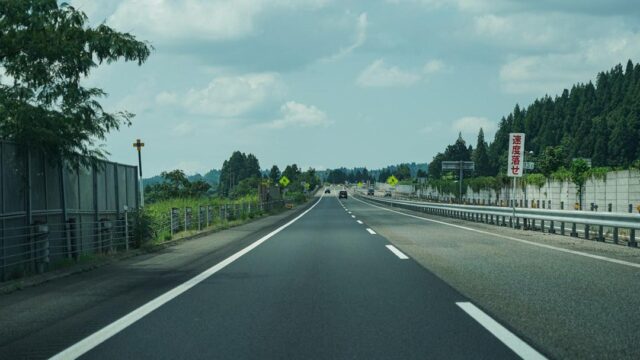
For many international visitors, the image of Japan is dominated by the sprawling, hyper-modern metropolis of Tokyo or the ancient, temple-lined streets of Kyoto. However, traversing the interior of the main island of Honshu reveals a drastically different landscape: the rugged, towering peaks of the Japanese Alps. The most spectacular and efficient way to experience this dramatic mountainous region is by driving the Chuo Expressway. Unlike the heavily trafficked Tomei Expressway, which hugs the relatively flat southern coast, the Chuo Expressway cuts a bold path directly through the heart of the mountains, connecting Tokyo to Nagoya via an elevated, twisting route of incredible engineering. It offers a driving experience that is as challenging as it is breathtaking, requiring a specific set of skills and preparation to navigate safely. This comprehensive guide will prepare you for the unique conditions, spectacular scenery, and necessary precautions of driving the Chuo Expressway.
Understanding the Topography and Climate
The Chuo Expressway is defined by its extreme topography. It does not simply go *around* the mountains; it goes *through* and *over* them. This means that drivers will encounter constant elevation changes, massive viaducts spanning deep valleys, and some of the longest highway tunnels in the country. This rugged environment dictates everything from the engineering of the road to the constantly shifting weather conditions you will face during your journey.
Drastic Elevation Changes
Driving the Chuo Expressway involves sustained, steep climbs and equally long descents. As you leave the urban sprawl of western Tokyo and enter Yamanashi Prefecture, the road begins a relentless upward trajectory. You will notice your rental car working significantly harder to maintain the speed limit as you ascend toward the highest points of the highway, which crest well over 1,000 meters (3,280 feet) above sea level near the border of Nagano Prefecture. These long ascents require patience; heavy trucks often struggle to maintain speed, clogging the left lane, which requires careful passing maneuvers on steep gradients. Maintaining a consistent speed and avoiding sudden braking on the inclines is crucial for a smooth drive. The elevation change is so pronounced that you will frequently feel your ears popping as the air pressure shifts, a physical reminder of the monumental scale of the landscape you are traversing.
Conversely, the long descents require active driver management to prevent brake failure. Relying entirely on your brake pedal while descending a 10-kilometer gradient is incredibly dangerous, as the brakes can quickly overheat and fail, a phenomenon known as brake fade. You must utilize engine braking by manually shifting your automatic transmission into a lower gear (usually marked as ‘3’, ‘2’, or ‘L’, or by using the paddle shifters if your rental car is equipped with them). This forces the engine’s natural resistance to slow the car, saving your brake pads for when you actually need to stop. You will frequently see large signs displaying a picture of a smoking tire with the text “エンジンブレーキ使用” (Use Engine Brake), indicating that a severe downgrade is imminent. Following this advice is non-negotiable for safe mountain driving on the Chuo Expressway. Ignoring this fundamental rule of mountain driving can lead to catastrophic accidents, so if you are unfamiliar with engine braking, it is imperative to familiarize yourself with your rental car’s transmission before beginning the climb into the Alps. The highway engineers have designed specific runaway truck ramps filled with gravel on the steepest sections, but a prepared driver will never need to use them.
The Microclimates of the Mountains
Because the Chuo Expressway spans such a massive range of elevations and cuts through deep valleys, it is famous for its volatile microclimates. You can literally drive out of a bright, sunny afternoon in Tokyo and plunge straight into a dense, blinding fog bank on the other side of a mountain tunnel. The weather at the starting point of your journey is absolutely no indicator of the weather you will experience at the highest passes. The rapid changes in temperature and visibility require constant vigilance and the ability to adapt your driving style instantly.
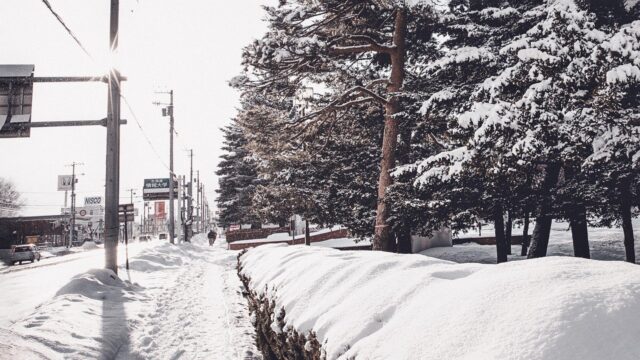
During the winter months (late November through early April), the climate variations become extreme. While Tokyo may be experiencing mild rain, the sections of the Chuo Expressway passing through Nagano and Yamanashi can be hit with sudden, severe blizzards. The highway operators are highly proactive, deploying fleets of snowplows at the first sign of accumulation, but the road surface can still become incredibly slick. Furthermore, even in the shoulder seasons of late autumn and early spring, the high-altitude sections are highly susceptible to “black ice”—a thin, invisible layer of ice that forms on the road surface, particularly on bridges and overpasses where the cold air circulates underneath. You must pay close attention to the electronic temperature displays on the highway message boards; if the temperature drops near or below freezing, you must assume black ice is present and drastically reduce your speed, even if the road looks perfectly dry.
- Snow Tires: Mandatory from December to March on the Chuo Expressway. Specify “studless tires” (スタッドレスタイヤ) when booking your rental car.
- Chain Regulations: During heavy snowfall, police will establish checkpoints. Vehicles without tire chains will be forced to exit the highway, even if they have snow tires.
- Black Ice Warning: Be extremely cautious on bridges and in tunnel exits where ice forms invisibly.
- Washer Fluid: Ensure your rental car is filled with winter-grade windshield washer fluid that will not freeze on the glass.
Navigating the Tunnel Network
To conquer the rugged terrain of the Japanese Alps, the engineers of the Chuo Expressway constructed an astonishing network of tunnels. These are not brief underpasses; they are massive, subterranean highways that bore straight through the heart of solid granite mountains. Driving through them is a unique experience that requires specific safety protocols and psychological preparation, especially for drivers unaccustomed to prolonged enclosed spaces.
The Sasago Tunnel
The most notorious and famous tunnel on the Chuo Expressway is the Sasago Tunnel, located in Yamanashi Prefecture. Stretching for nearly 5 kilometers (over 3 miles), it was a marvel of modern engineering when it opened, drastically reducing travel times between Tokyo and the interior regions. Driving through a tunnel of this length requires strict discipline. The environment is highly controlled: the lighting is artificial, the air is circulated by massive jet fans mounted to the ceiling, and the noise of hundreds of echoing engines can be overwhelming. The lack of natural visual reference points makes it incredibly easy to inadvertently speed up or drift out of your lane, known as the “tunnel effect,” where your sense of speed becomes distorted by the passing concrete walls.
When entering the Sasago Tunnel, or any of the other long tunnels on the route, you must immediately remove your sunglasses, ensure your headlights are turned on (even during the day), and maintain a strict following distance. The speed limit inside the tunnels is often lower than the open highway, and speed cameras are frequently deployed near the entrances and exits to enforce this. Furthermore, you must never change lanes inside a tunnel unless absolutely necessary, as the confined space leaves zero room for error if another driver is in your blind spot. The solid white lines painted between the lanes inside the tunnels indicate that lane changes are strictly prohibited by law. You must choose your lane before entering and commit to it until you emerge on the other side. This strict adherence to lane discipline prevents chaotic weaving and significantly reduces the risk of multi-vehicle collisions in a space where emergency vehicles would have immense difficulty reaching you. Treat the tunnel as a highly regulated zone demanding your absolute best driving behavior.
Managing Tunnel Fatigue
Driving through successive long tunnels can induce a specific type of driver fatigue. The monotonous, strobing effect of the overhead lights, combined with the loud, droning noise of the engine echoing off the concrete walls, can have a hypnotic, sleep-inducing effect. This is a recognized phenomenon in Japan, and the highway authorities employ various strategies to combat it. You will often find the tunnel walls painted with bright, shifting geometric patterns, or the lighting will suddenly change color to jolt drivers back to full attention. Sometimes, specialized grooves are cut into the pavement near the entrance, which transmit a loud, buzzing vibration through your tires, acting as a physical wake-up call before you plunge into the darkness.
Despite these engineering interventions, the responsibility for managing tunnel fatigue lies primarily with the driver. If you feel your eyes getting heavy, you must pull into a Parking Area (PA) or Service Area (SA) immediately before entering the next major tunnel segment. Do not attempt to “push through” a 5-kilometer tunnel if you are already drowsy. Rolling down the windows slightly to let in the roar of the ambient noise can temporarily break the hypnotic effect, but nothing replaces an actual rest break. The Chuo Expressway is demanding, and the tunnel sections require your absolute, undivided attention. Treating these subterranean stretches with the respect they command is vital for safely navigating the mountainous route. A simple fifteen-minute nap at a rest stop can completely reset your focus, preventing a potentially fatal mistake inside the confined space of a mountain tunnel. Never underestimate the psychological toll of driving underground for extended periods.
The Scenic Highlights of the Route
While the driving conditions demand strict attention, the reward for navigating the Chuo Expressway is unparalleled scenery. It is widely considered one of the most beautiful highways in Japan, offering panoramic views of deep valleys, pristine lakes, and the towering, jagged peaks of the Southern and Central Alps. The route transforms dramatically with the seasons, offering a completely different aesthetic depending on when you choose to travel.
The Suwa Lake Panorama
As you cross from Yamanashi into Nagano Prefecture, the highway climbs to one of its highest points before suddenly revealing the sprawling expanse of Lake Suwa in the valley below. This is one of the most breathtaking reveals on any Japanese highway. The road skirts the edge of the mountains, providing a prolonged, elevated view of the lake, which is surrounded by the dense urban layout of Suwa City and framed by the massive peaks of the Northern Alps in the far distance. The dramatic shift from tight, forested canyons to this massive, open vista is visually stunning and often prompts drivers to instinctively slow down just to take it all in.
The best way to truly appreciate this view is to pull into the Suwako Service Area, which is strategically built on a high ridge overlooking the water. This facility offers arguably the best panoramic view on the entire Chuo Expressway network. During the autumn months (late October to November), the hillsides surrounding the lake explode in vibrant shades of red and gold, creating a spectacular contrast with the deep blue of the water. In the winter, the lake occasionally freezes completely solid, creating a stark, icy landscape that feels incredibly remote, a phenomenon famously known locally as the “Omiwatari” or “God’s Crossing” when the ice cracks in massive ridges. The ability to pull off the highway, grab a hot coffee, and stare out over this massive, natural amphitheater makes the challenging drive completely worthwhile. It is a moment of profound natural beauty juxtaposed against the massive concrete infrastructure of the highway itself. Taking the time to photograph the sunset over the lake from this specific vantage point is a quintessential Chuo Expressway experience that perfectly captures the beauty of the region.
Views of the Southern Alps
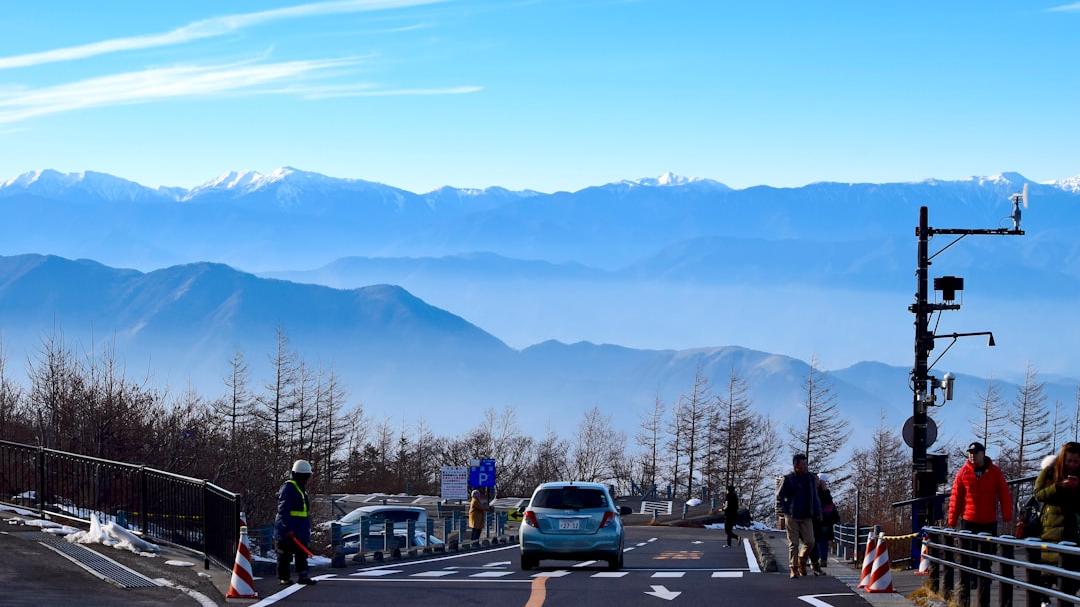
Further west, as the highway continues through Nagano and into Gifu Prefecture, the dominant features on the horizon are the jagged, imposing peaks of the Southern Japanese Alps (Minami Alps). These mountains are significantly taller and more rugged than the gentle, rolling hills found closer to Tokyo, boasting peaks that exceed 3,000 meters. They dominate the skyline, their peaks often shrouded in clouds or capped with snow well into the early summer. The highway weaves through the valleys at the base of these giants, offering constant, shifting perspectives of the mountain range as you navigate the sharp curves and elevated viaducts.
The sheer scale of these mountains is difficult to comprehend from the driver’s seat. They create a dramatic, imposing backdrop for the entire western half of the journey, emphasizing the incredible feat of engineering required to build a highway through this terrain. The Komagatake Service Area provides an excellent vantage point for admiring the Central Alps, offering clear sightlines of the massive granite faces that characterize the region. The drive through this section feels wild and remote, a stark contrast to the heavily urbanized coastal routes, transporting you into a landscape that feels largely untouched by human development. It is highly recommended that passengers have their cameras ready, as the views change rapidly as the highway navigates the twisting river valleys. Capturing the imposing silhouette of the Alps rising sharply above the elevated concrete viaducts of the expressway results in spectacular, uniquely Japanese landscape photography. The interplay between the massive, gray concrete pillars holding up the highway and the ancient, green slopes of the mountains perfectly encapsulates the modern Japanese approach to conquering difficult topography.
| Hazard Type | Location/Condition | Driver Action Required |
|---|---|---|
| Steep Downgrades | Yamanashi/Nagano border | Shift to lower gear; use engine braking; avoid riding brakes. |
| Long Tunnels | Sasago Tunnel | Turn on headlights; maintain lane; do not change lanes. |
| Black Ice | Bridges and tunnel exits | Reduce speed; avoid sudden braking; check temperature signs. |
| Sudden Fog | High mountain passes | Use fog lights (if equipped); increase following distance. |
Essential Rest Stops on the Chuo
Given the physical and mental demands of driving the Chuo Expressway, utilizing the Service Areas (SA) and Parking Areas (PA) is not just a convenience; it is a critical safety requirement. You cannot drive this route straight through with the same casual attitude you might apply to a flat, straight interstate highway. The rest stops along the Chuo are specifically designed to provide relief from the intense mountain driving, offering unique amenities and regional specialties that reflect the distinct culture of the Japanese Alps.
Expasa Dangozaka (Downline/Westbound)
Located relatively early in the journey as you leave Tokyo, EXPASA Dangozaka is a massive, modernized Service Area that serves as the primary launching pad for trips into the mountains. It is famous for its extensive food court and massive souvenir shops, but its primary function is to allow drivers to take a final break before the serious elevation climbs begin. It is highly recommended to stop here to check your tire pressure, ensure you have plenty of windshield washer fluid, and grab any necessary snacks for the challenging drive ahead. Treating Dangozaka as your final prep station is a smart strategy for a smooth journey.
Dangozaka is deeply integrated with the local culture of Yamanashi Prefecture. It is one of the best places on the highway network to purchase *Hoto*, a traditional local dish consisting of thick, flat udon noodles simmered in a rich miso and pumpkin broth, often loaded with seasonal mountain vegetables. Eating a steaming bowl of Hoto here is a cherished ritual for many Japanese drivers preparing for a winter trip into the Alps, providing immense comfort and warmth before braving the colder altitudes. The facility also features an extensive bakery and multiple cafes, providing a comfortable, modern environment to relax and review your route map before tackling the mountain passes. It sets the standard for the high-quality hospitality you will encounter throughout the journey. Furthermore, the outdoor plazas often feature local farmers selling fresh fruit, particularly the famous Yamanashi peaches and grapes, which make for the perfect, healthy road trip snack as you continue your ascent into the mountains.
Suwako SA and its Hot Springs
As previously mentioned, the Suwako Service Area offers incredible views of Lake Suwa, but its most famous amenity is its fully functional, natural hot spring (onsen). Located right inside the main building, the “Highway Onsen Suwako” allows drivers to strip off their travel clothes and soak in mineral-rich thermal waters while looking out massive panoramic windows at the lake below. It is an experience that perfectly encapsulates the unique luxury of Japanese highway travel, blending modern transportation infrastructure with ancient cultural traditions of bathing and relaxation.
Taking a 30-minute break to soak in the onsen is arguably the most effective way to combat the intense physical fatigue caused by gripping the steering wheel through the twisting mountain passes and long tunnels. The hot water drastically improves circulation and relaxes tense shoulder muscles, allowing you to return to the car feeling completely rejuvenated and focused. It is incredibly popular with professional truck drivers and tourists alike, functioning as a vital restorative stop on the long haul across the Alps. The facility provides towels for a small rental fee, meaning you do not need to unpack your luggage to use it, and the locker rooms are immaculately clean and secure. If you only plan one major stop on the entire Chuo Expressway, the Suwako Service Area should be the undeniable priority. Emerging from the hot spring, grabbing a cold bottle of local milk, and watching the sunset over the lake before continuing your drive is a memory that will likely outshine many of the official tourist destinations on your itinerary.
Conclusion
Driving the Chuo Expressway is not merely a method of getting from point A to point B; it is an active, demanding, and immensely rewarding journey through the dramatic heart of the Japanese Alps. It stands in stark contrast to the flat, urbanized coastal routes, demanding a higher level of driver engagement, strict adherence to safety protocols, and a healthy respect for the unpredictable mountain weather. From managing steep descents with engine braking to navigating the hypnotic expanse of massive subterranean tunnels, the route tests your skills while simultaneously rewarding you with some of the most spectacular, rugged scenery available in the country. It is a testament to the incredible engineering prowess of Japan, forcing massive concrete arteries through uncompromising terrain.
For the international traveler, properly preparing for the Chuo Expressway transforms a potentially stressful drive into a highlight of the vacation. By understanding the topographical challenges, utilizing the incredible facilities at rest stops like Suwako and Dangozaka, and prioritizing safety over speed, you can confidently navigate the “Roof of Japan.” The experience of guiding a vehicle through these massive granite peaks, stopping to soak in a highway hot spring, and witnessing the jagged silhouette of the Alps against the horizon provides a profound understanding of Japan’s wild interior, proving that the journey itself can be just as compelling as the destination. The memories forged while gripping the steering wheel on these high-altitude passes will linger long after you have returned your rental car, serving as a powerful reminder of the breathtaking, dramatic beauty that lies just a few hours outside the neon glow of Tokyo.