The Ultimate Guide to Coin Showers and Laundry at Japanese Rest Stops
Traveling across Japan by rental car offers unparalleled flexibility, allowing you to explore remote regions at your own pace. However, extended road trips, especially for those camping or sleeping in their vehicles, require practical planning for personal hygiene. Fortunately, Japan’s highway network is equipped with excellent facilities for long-haul drivers, including surprisingly clean coin-operated showers and laundry services directly at major Service Areas (SA) and some Parking Areas (PA). This guide will walk you through everything you need to know to stay fresh and comfortable on your Japanese road trip.
Why Use Highway Shower and Laundry Facilities?
When driving long distances, you might assume that checking into a hotel or finding a public bathhouse in a nearby city is the only way to get clean. However, utilizing the facilities built directly into the expressway network offers significant advantages that can drastically improve your travel experience in Japan.
Supreme Convenience for Long-Distance Drivers
The primary benefit of using highway showers and laundry is the sheer convenience. During a multi-day road trip, exiting the expressway to search for a local laundromat or public bathhouse consumes valuable vacation time. It also forces you to navigate unfamiliar urban traffic and pay additional toll fees when you re-enter the highway. By using the facilities at a Service Area (SA), you simply park your car, grab your toiletries, and walk inside.
These facilities are intentionally designed for people who are on the move. They are typically open 24 hours a day, which is perfect for travelers who prefer to drive late at night to avoid traffic. Knowing that you can pull into a major rest stop at 2 AM and take a hot shower provides incredible peace of mind. It allows you to maintain a flexible itinerary without being tethered to hotel check-in times.
Cost-Effective Hygiene on the Road
Another major advantage is cost efficiency. Booking a hotel simply to take a shower and wash clothes is an expensive strategy. In contrast, using a coin shower at a Japanese highway rest stop usually costs around 200 to 300 yen for 10 minutes of hot water. This is incredibly affordable for budget-conscious travelers.
Similarly, using the coin laundry machines at these facilities costs a fraction of what typical hotel laundry services charge. You can wash and dry a full load of clothes for roughly 500 to 800 yen. For tourists utilizing options like a regional Expressway Pass, staying on the toll road and utilizing these cheap, on-site services maximizes your budget, leaving you more money to spend on local food and attractions.
What to Expect at a Japanese Coin Shower
If you have never used a public coin shower in Japan, you might be unsure of what to expect regarding cleanliness, privacy, and the amenities provided. Japanese highway facilities are renowned for their high standards, and their shower rooms are no exception.
Cleanliness, Privacy, and Basic Amenities
The coin showers at Japanese Service Areas are meticulously maintained. Cleaning staff regularly sanitize the booths throughout the day and night. When you enter a shower facility, you will typically find individual, fully enclosed private booths with locking doors. Inside each booth, there is a dry changing area where you can safely leave your clothes and towel, separated from the wet shower space by a waterproof door or curtain.
Most coin showers provide basic amenities like body soap and a two-in-one shampoo and conditioner, usually dispensed from large bottles mounted on the wall. However, this is not always guaranteed, so it is highly recommended to bring your own travel-sized toiletries just in case. You must also bring your own towel, as rentals are rarely available at these automated booths. If you forget one, you can usually purchase a small face towel at the adjoining 24-hour convenience store or souvenir shop.
How to Operate the Shower Machines
Operating a coin shower is straightforward, even if the instructions are only in Japanese. Inside the booth, you will find a small coin box mounted on the wall. The standard rate is usually 200 yen for 10 minutes of water. It is crucial to have exactly 100-yen coins, as these machines do not accept bills, 500-yen coins, or electronic payments like IC cards.
Once you insert the coins, a timer will appear on a digital display. The timer only counts down when the water is actively running. You can press a button to pause the water flow while you lather up with soap, which conserves your paid time. A warning beep usually sounds when you have one minute remaining. If you need more time, you can simply insert additional 100-yen coins before the timer runs out.
- Bring plenty of 100-yen coins (machines do not give change).
- Always pack your own towel and travel-sized toiletries.
- Use the pause button to save your paid water time while washing.
- Shower rooms are strictly separated by gender.
How to Use Highway Coin Laundry Facilities
Finding clean clothes halfway through a week-long road trip is essential. While not as common as showers, several major Service Areas across Japan feature fully equipped coin laundry rooms that are incredibly useful for foreign drivers.
Washing and Drying Machines
The laundry rooms typically feature standard, commercial-grade washing machines and tumble dryers. The washing machines are fully automated and usually cost around 200 to 300 yen per load, taking about 30 to 40 minutes to complete a cycle. The dryers are usually charged by time, such as 100 yen for 10 or 15 minutes. Heavy cotton items like jeans may require 30 to 40 minutes to dry completely.
One very convenient feature of modern Japanese coin laundries is that many washing machines automatically dispense liquid detergent and fabric softener during the cycle. You do not need to buy or bring your own soap for these specific machines. However, older machines might require you to add detergent yourself. In this case, there is usually a small vending machine in the room selling single-use packets of detergent for about 50 yen.
Etiquette in the Laundry Room
Because these facilities are shared by many travelers, including professional truck drivers, basic etiquette is important. Do not leave your clothes unattended in a machine long after the cycle has finished. Other people may be waiting to use the limited number of washers and dryers. It is polite to set an alarm on your phone so you can promptly retrieve your items.
If you find a finished load sitting in a machine you need to use, it is generally acceptable in Japan to carefully transfer those clothes into one of the provided plastic laundry baskets (usually stacked in the room) so you can start your own wash. Be respectful and place their items neatly. While waiting for your laundry, you can explore the Service Area; this is a great time to grab a meal or check out the Best Highway Rest Stops for Local Japanese Souvenirs (Omiyage).
Notable Service Areas with Excellent Shower Facilities
While you can find coin showers scattered across the country, certain Service Areas on major routes are particularly famous for their expansive and comfortable facilities. Knowing where these are can help you plan your driving schedule effectively.
Tomei Expressway: Nakatsu-gawa SA and Ashigara SA
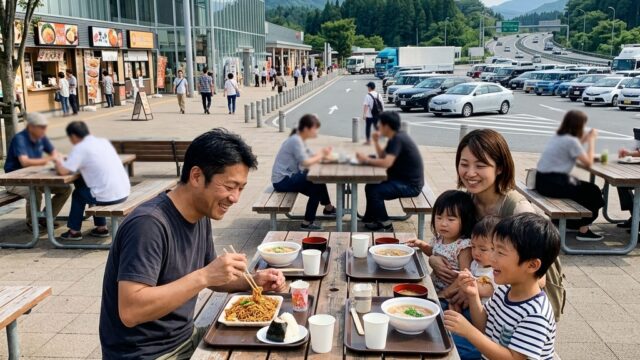
If you are traveling the busy route between Tokyo and Nagoya on the Tomei Expressway, you have several excellent options. The EXPASA Ashigara (both Inbound and Outbound) is highly recommended. Not only does it have standard coin showers, but it also features a full natural hot spring facility where you can bathe more luxuriously. This is a massive rest stop, so you can easily spend a few hours here recovering.
Further along, the Nakatsu-gawa SA (Outbound) is another popular stop for truck drivers and road trippers. It features very clean, 24-hour coin showers located in a dedicated building separate from the main food court. The separation provides a quieter environment. This Service Area is strategically placed for drivers heading deep into the Chubu region or preparing for a long drive towards the Kansai area.
Shin-Tomei Expressway: NEOPASA Shizuoka and Hamamatsu
The newer Shin-Tomei Expressway was built with modern logistics and driver comfort in mind. Consequently, almost all of its major Service Areas, branded as “NEOPASA,” feature pristine shower facilities. NEOPASA Shizuoka (both directions) is a prime example. The shower rooms here are spacious, brightly lit, and equipped with separate powder rooms where you can use a hair dryer or shave.
NEOPASA Hamamatsu is another fantastic option on this route. The facilities are modern and include a dedicated coin laundry room right next to the showers. You can put your dirty clothes in the wash, take a relaxing 20-minute shower, and by the time you are dressed, your clothes are ready for the dryer. For a comprehensive guide to navigating these specific routes, see our article on Tokyo to Nagoya by Car: Best Highway Route, Service Areas & Rest Stops.
Alternatives to Coin Showers: Highway Hot Springs
While coin showers are fast and cheap, they aren’t the only way to get clean on a Japanese expressway. For a more relaxing and culturally immersive experience, you should definitely seek out Service Areas that feature full-scale public bathhouses or natural hot springs (Onsen).
The Highway Oasis Concept
A “Highway Oasis” is a large recreational complex directly connected to a highway rest stop. These locations go far beyond basic amenities, often featuring expansive parks, farmers’ markets, and large spa facilities. You can park your car in the designated highway parking lot and walk directly into the spa without paying an exit toll.
These spas typically charge an entrance fee of around 600 to 1,000 yen. Inside, you will find expansive locker rooms, numerous sit-down washing stations with unlimited hot water, soap, and shampoo, and several large communal soaking tubs. After a long day of driving, stretching out in a massive hot bath is infinitely more relaxing than standing in a cramped coin shower booth.
Famous Highway Onsen Stops
One of the most famous examples is the Kariya Highway Oasis on the Isewangan Expressway. It features the “Kakitsubata Spa,” a beautiful natural hot spring facility with open-air baths and relaxation lounges. It is an incredible place to spend an evening.
Another excellent stop is the Suwa Lake Service Area (Inbound and Outbound) on the Chuo Expressway. This SA features a genuine hot spring bath located inside the main building, offering panoramic views of Lake Suwa while you soak. It is a fantastic way to experience Japanese bathing culture conveniently during your drive. To learn more about driving this scenic route, read our guide on Driving the Japan Alps: A Guide to the Chuo Expressway.
Important Preparation Tips for Foreign Tourists
To make the most of the hygiene facilities on Japanese highways, a little bit of preparation goes a long way. Having the right items in your car will ensure you can take a shower or wash clothes whenever the opportunity arises.
Creating a Highway Hygiene Kit
We highly recommend packing a dedicated small bag specifically for your rest stop visits. This prevents you from having to dig through your large suitcases in the trunk every time you want to shower.
Your highway hygiene kit should include a quick-drying microfiber towel, travel-sized shampoo and body wash, a toothbrush and toothpaste, deodorant, and a change of clean underwear and socks. If you plan to use the laundry facilities, include a small plastic bag for carrying wet clothes or storing your dirty items until you reach the next laundromat. Having this kit readily accessible in the passenger cabin makes impromptu stops much smoother.
Managing Cash and Coins
As mentioned earlier, Japan is still very much a cash-based society when it comes to small automated machines. Coin showers, laundry machines, massage chairs, and many vending machines only accept physical coins.
Whenever you buy snacks or drinks at the convenience stores inside the Service Areas, try to pay with 1,000-yen bills so you can collect 100-yen coins in change. Keep a dedicated coin purse or a cup in your car’s cup holder specifically for these 100-yen coins. If you arrive at a shower facility at 3 AM with only a 10,000-yen bill and the nearby shops are closed, you will not be able to use the machines. Being prepared with exact change is the most important rule for utilizing these fantastic highway amenities.
Conclusion
Maintaining personal hygiene during a long Japanese road trip is surprisingly easy once you know how to utilize the country’s excellent highway infrastructure. The network of coin showers and laundry facilities available at major Service Areas (SA) ensures that you can always find a place to freshen up, no matter how far off the beaten path your journey takes you.
By taking advantage of these 24-hour facilities, you gain the freedom to travel on your own schedule. You can drive late into the night, sleep comfortably in your car or an on-site capsule hotel, and wake up to a hot shower and clean clothes without ever leaving the expressway. This not only saves you significant money on tolls and hotel rooms but also maximizes the time you have to explore Japan.
Remember to pack a dedicated hygiene kit, always keep a supply of 100-yen coins in your vehicle, and do not hesitate to upgrade your experience by visiting a Service Area with a natural hot spring. With these tips in mind, you are fully prepared to enjoy a comfortable, clean, and unforgettable driving adventure across Japan.