Speed Limits and Traffic Rules on Japanese Expressways: A First-Timer’s Guide
So, you’ve rented a car in Japan and you’re ready to hit the road. Awesome choice! Driving is one of the best ways to see the parts of this country that are off the beaten path. But as you approach that first green sign for the expressway, you might feel a little nervous. What are the speed limits? Which lane should I be in? What are all those signs saying?
Don’t worry, we’ve got you covered. Driving on Japan’s expressways, or *kosoku-doro* (高速道路), is surprisingly straightforward once you get the hang of it. They are incredibly well-maintained, safe, and efficient. This guide is here to walk you through everything you need to know, from speed limits and tolls to the unwritten rules of the road and the magic of Japanese rest stops.
Think of this as your friendly co-pilot, here to make your first Japanese road trip smooth, safe, and a lot of fun.
Understanding the Basics: Speed Limits on Japanese Expressways
First things first, let’s talk about speed. While you might see some locals flying by, sticking to the speed limit is your best bet for a stress-free drive. The limits are generally consistent, but there are a few things to keep in mind.
Default Speed Limits vs. Posted Signs
The default maximum speed limit on most major expressways in Japan is 100 km/h (about 62 mph). There’s also a minimum speed limit of 50 km/h (about 31 mph) to ensure traffic flows smoothly. However, the most important rule is to always follow the speed shown on the posted signs. You’ll see them as black numbers inside a white circle with a red border. These posted limits override the default. On some newer sections of expressways like the Shin-Tomei Expressway and Shin-Meishin Expressway, the limit has been raised to 120 km/h, but this is only for specific, clearly marked zones.
Weather and road conditions can change everything. During heavy rain, strong winds, fog, or snowfall, the speed limit will be temporarily lowered. These changes are displayed on bright electronic signs hanging over the expressway. You might see the limit drop to 80 km/h or even 50 km/h. These are not suggestions; they are mandatory limits for your safety. Always pay close attention to these digital signs, as they provide the most current information.
The Unspoken Rule: Keeping Pace with Traffic
While you should never break the posted speed limit, you’ll quickly notice that many drivers travel slightly above it. The key is to find a balance and “read the room.” Driving significantly slower than the flow of traffic, especially in the right lane, can be just as disruptive and potentially dangerous as speeding. The goal is to maintain a safe and consistent speed that matches the general pace of the cars around you in the cruising lane.
A crucial piece of driving etiquette in Japan is lane discipline. The right lane is strictly for passing. After you overtake a vehicle, you are expected to move back into the left lane. Lingering in the right lane is considered poor manners and can even get you pulled over by the police. For more on this, check out our guide to the Unspoken Rules of Japanese Highways: The “Thank You” Hazard Lights and Driving Etiquette. Blending in with the local driving culture will make your journey much smoother.
Navigating the Lanes: Which Lane Should You Be In?
Remember, Japan drives on the left. This is the single most important thing to get used to. On the expressway, this principle extends to how you use the lanes. Proper lane usage is key to a safe and efficient journey.
The Left Lane is for Cruising, The Right Lane is for Passing
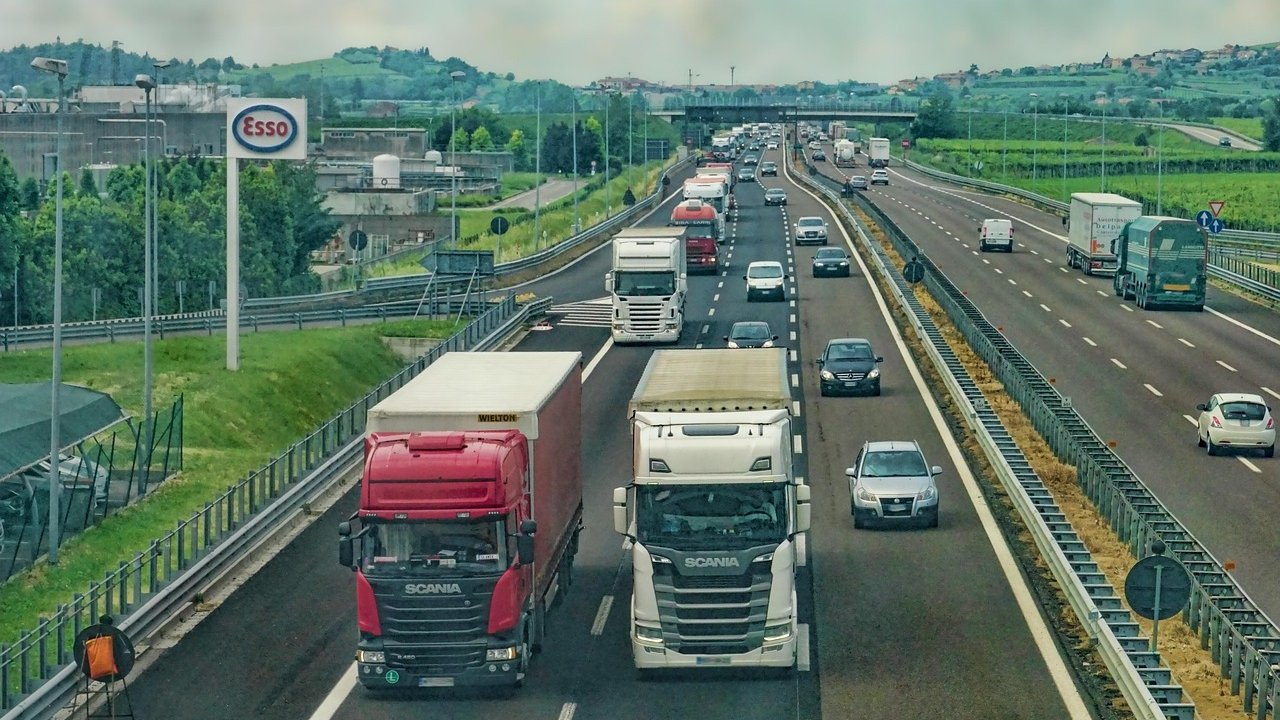
On a standard two-lane expressway, the rule is simple: keep left, pass right. The left lane is your main driving lane, or the “cruising lane.” This is where you should stay for the majority of your journey. The right lane is the “passing lane” or “overtaking lane.” You should only use it when you need to overtake a slower vehicle. Once you have safely passed, you must merge back into the left lane. Cruising in the right lane is a traffic violation and will frustrate other drivers.
On expressways with three or more lanes, the same principle applies. The leftmost lane is for cruising, and the lanes to the right are for passing. Large trucks and buses are generally required to stay in the far-left lane, so be mindful of them when you’re planning to overtake. It’s a simple system that, when followed by everyone, keeps traffic moving smoothly and predictably.
Merging and Exiting: Getting On and Off the Expressway
Getting onto the expressway requires confidence. The on-ramp, or “acceleration lane,” is there for a reason: to get your speed up to match the flow of traffic. Don’t be timid. Check your mirrors, signal your intention early, and accelerate smoothly until you find a safe gap to merge into the main lanes. Merging too slowly is dangerous and forces other drivers to brake suddenly.
When it’s time to exit at an Interchange (IC), preparation is key. Your GPS will give you plenty of warning. Start moving into the far-left lane at least 1-2 kilometers before your exit. The exit signs are large, green, and have English on them, so they’re hard to miss. If you do accidentally miss your exit, never, ever stop or reverse on the expressway. It’s incredibly dangerous. Just continue to the next IC and exit there. You can explain the situation to the toll gate attendant, who can often help you get turned around without extra charges. For a detailed guide on this situation, see What to Do if You Miss Your Highway Exit in Japan.
Reading the Signs: Key Japanese Expressway Signage
Japanese highway signs are generally very tourist-friendly, with most important information written in both Japanese and English (or at least Romanized Japanese, known as *romaji*). Understanding a few key signs will make you feel even more confident behind the wheel.
Green Signs and What They Mean
On Japanese expressways, green is your color. All major directional and informational signs are on a green background. These signs will tell you the names of upcoming Interchanges (IC) for exiting, Junctions (JCT) for changing to another expressway, and the all-important Service Areas (SA) and Parking Areas (PA) for taking a break. The distances to these points are also clearly marked.
While the names are in English, it can be helpful to recognize the general shape of the Japanese characters (*kanji*) for your destination city. Sometimes, seeing the *kanji* first can give you an extra split second to prepare for your exit. The signs for rest stops will also often have small icons indicating the facilities available, such as a gas pump, a knife and fork for restaurants, or a coffee cup. Learning these symbols is a great way to quickly know what’s ahead. For a deeper dive, our guide on Decoding Japanese Highway Signs: What the Colors, Lines, and Electronic Boards Mean is a great resource.
Electronic Information Boards: Your Real-Time Guide
As you drive, you’ll see large electronic signboards hanging over the road. These provide real-time updates on traffic conditions ahead. While much of the text is in Japanese, they often use universal symbols and colors to convey information. A red car icon with lines behind it usually indicates a traffic jam. The Japanese word for traffic jam is 渋滞 (Jutai), and seeing these two characters is a good sign to prepare for a slowdown.
These boards will also show information about accidents, road closures (通行止), lane restrictions, and estimated travel times to major interchanges. For example, you might see “Tokyo IC 40分” which means it will take 40 minutes to reach the Tokyo Interchange. Even if you can’t read Japanese, paying attention to the diagrams and numbers can give you a crucial heads-up about what’s happening on the road ahead. Some systems also broadcast traffic information via a dedicated radio frequency (1620 kHz AM), which can be useful on longer drives.
Tolls and Payments: The ETC System Explained
Japan’s expressways are not free. In fact, they can be quite expensive. But the payment system is highly efficient, especially if you’re prepared. Understanding how to pay the tolls will save you a lot of time and potential confusion at the toll gates.
Why an ETC Card is a Must-Have for Your Rental Car
The easiest way to pay tolls is with an ETC (Electronic Toll Collection) card. This is a small card that you insert into a reader device in your car (usually mounted on the dashboard or near the rearview mirror). When you rent a car, you can almost always rent an ETC card at the same time for a small fee. We strongly recommend you do this.
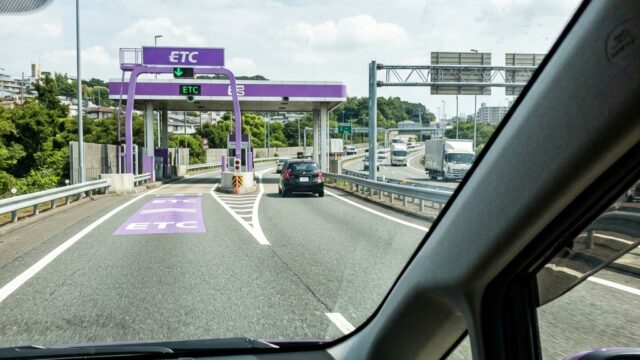
With an ETC card, you don’t need to stop at toll gates. As you approach, you’ll see lanes marked with purple signs that say ETC専用 (ETC Only). Simply slow down to about 20 km/h, and the gate will automatically open for you. The toll is charged to the card, and you’ll settle the total bill when you return your rental car. It’s seamless, fast, and often gives you access to small discounts on certain days or times. For a complete rundown, check out our articles on Why You Should Always Book a Rental Car with an ETC Reader in Japan and How to Use ETC in Japan: A Complete Guide to Electronic Toll Collection.
What if I Don’t Have an ETC Card?
If you decide not to get an ETC card, you’ll have to use the “General” lanes. These are marked with green signs that say 一般 (Ippan). When you enter the expressway, you’ll stop at a machine and take a paper ticket. Do not lose this ticket! When you exit the expressway, you’ll drive into another “General” lane, hand the ticket to the toll booth attendant, and pay the fee.
Most manned toll booths accept both cash and credit cards. However, it’s always a good idea to have some cash on hand just in case a particular gate’s card reader is out of service or doesn’t accept foreign cards. Some gates are automated, requiring you to insert the ticket and then cash or a card into the machine. If you’re unsure, just look for the lane with an attendant. Using the General lane is perfectly fine, but it’s definitely slower than zipping through the ETC lane, especially during busy periods.
Taking a Break: Welcome to Japan’s Amazing Rest Stops
One of the absolute best parts of a Japanese road trip is the rest stops. They are not just places to use the toilet and stretch your legs. They are destinations in themselves, offering incredible food, unique souvenirs, and spotless facilities. They are broadly divided into two types: Service Areas (SA) and Parking Areas (PA).
SA vs. PA: What’s the Difference?
- Service Area (SA): These are the larger rest stops, appearing roughly every 50-60 kilometers. They almost always have a gas station, a large food court or restaurant, a big souvenir shop, and often a convenience store or cafe like Starbucks. They are designed for longer breaks.
- Parking Area (PA): These are smaller and more frequent, found every 15-20 kilometers. Traditionally, they offered just parking, restrooms, and vending machines. However, many PAs have been upgraded and now feature small food stalls and souvenir corners, sometimes rivaling smaller SAs in quality.
The most important thing to know is that both SAs and PAs have clean, free, 24-hour restrooms and vending machines. You’ll never be far from a clean facility on a Japanese expressway. The choice of where to stop often depends on what you need. If you need gas or a full meal, aim for an SA. If you just need a quick coffee and a bathroom break, a PA is perfect. For a more detailed comparison, our Japan Highway Service Areas Guide has all the info.
More Than Just a Restroom: What to Expect Inside
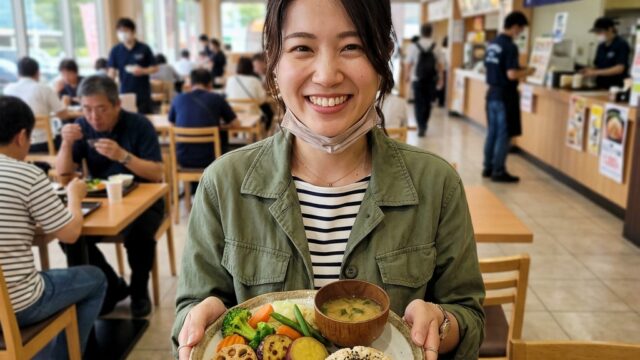
Prepare to be amazed. The food courts at many SAs serve up fantastic local specialties. You can find everything from amazing ramen and udon to fresh seafood bowls and unique soft-serve ice cream flavors. Most use a ticket machine system: you select your meal from a display with pictures, buy a ticket, and hand it to the kitchen staff. While English menus are becoming more common, the pictures make it easy to order even if you can’t read Japanese.
The souvenir shops, or *omiyage* corners, are a treasure trove. They sell beautifully packaged local snacks, crafts, and produce that you won’t find anywhere else. It’s the perfect place to pick up gifts. Some SAs are famous destinations, like Ebina SA, known for its incredible food options, or the unique Hanyu SA, which is designed to look like a town from the samurai era. Many even have bakeries, observation decks, dog runs, and some, like Ashigara SA, even have a hot spring! Taking breaks at SAs and PAs is an essential part of the Japanese road trip experience.
Staying Safe: Enforcement and Emergency Procedures
Japanese expressways are among the safest in the world, thanks to excellent engineering and generally courteous drivers. However, rules are strictly enforced, and it’s important to know what to do if you run into trouble.
Speed Cameras and Police Patrols
Yes, there are speed cameras. They are often preceded by a warning sign, but not always. You’ll also see police cars (both marked and unmarked) patrolling the expressways. They are particularly watchful for speeding, improper lane usage (like camping in the right lane), and unsafe driving.
The best way to avoid a ticket is simple: don’t speed. Stick to the posted limits, follow the rules of the road, and focus on driving safely. A speeding ticket is an expensive and stressful souvenir you don’t want to take home from your trip. For more details on what to look out for, you can read our guide on Understanding Speed Cameras and Police Traps on Japanese Highways. Just drive responsibly, and you’ll have no problems at all.
What to Do in Case of a Breakdown or Accident
If you have a flat tire, run out of gas, or are involved in an accident, your safety is the number one priority.
| Step | Action |
|---|---|
| 1. Move to Safety | Turn on your hazard lights immediately. Carefully pull your vehicle over to the far-left shoulder of the road. |
| 2. Set Up Warnings | Place the triangular warning reflector well behind your vehicle to alert oncoming traffic. Your rental car should have one in the trunk. Use the emergency flare if you have one, especially at night. |
| 3. Evacuate | Do not stay in the car. Have all passengers exit the vehicle on the side away from traffic and wait in a safe place, such as behind the guardrail. |
| 4. Call for Help | Use your phone to call for help. The police emergency number is 110. If you need roadside assistance, call the number provided by your rental car company or the Japan Automobile Federation (JAF). There are also emergency telephones located every kilometer along the expressway shoulder that connect you directly to the highway control center. |
Never try to change a tire or perform repairs on the expressway shoulder yourself; it’s extremely dangerous with traffic flying by. Wait for professional assistance in a safe location. Having the rental company’s emergency contact number saved in your phone is a very good idea. For a comprehensive checklist, refer to our guide on what to do in an Emergency on a Japanese Highway.
Conclusion
Driving on a Japanese expressway for the first time might seem daunting, but it’s a system built on logic, safety, and efficiency. By understanding the core rules—drive on the left, keep to the speed limit, use the right lane only for passing, and get an ETC card—you’ll quickly feel comfortable and in control. The clear signage and predictable nature of the roads make navigation far easier than you might expect. More than just a way to get from A to B, the expressways are an integral part of the travel experience in Japan. The real joy comes from the freedom to explore at your own pace and the delightful discoveries waiting at every Service Area and Parking Area. From gourmet ramen to stunning views of Mt. Fuji, the journey itself truly becomes the destination. So buckle up, take a deep breath, and get ready for an unforgettable road trip across one of the most beautiful and driver-friendly countries in the world.